RoboCupRescue 2009 - Robot League Team NIIT BLUE (Japan)
Katsuji Oogane, Nariaki Hirokami
Niigata Institute of Technology
Abstract This robot have 4 arm.It moves by power of passive.This robot can get over an obstacle by power of the passiveness when arm came in contact with an obstacle.And it moves by actively too.This robot put hardware in 4 arms. In using these arms, the robot can run surely even in a stricken area. We performed miniaturization of a body to run at the small place.
1. Team Members and Their Contributions
Katsuji Oogane Advisor, Director Nariaki Hirokmai Program of robot Takeo Ikarasshi Operation of robot Kentaro Shimaoka Maintenance of robot Kenta Yuki Maintenance of robot Masato Ogawa Maintenance of robot
2. Operator Station Set-up and Break-Down (10 minutes)
Setup
1.Hardware ・Connection of battery ・Operation check of a robot ・Check of wireless camera and camera monitor 2.Software ・Boot computer ・Connection of wireless communication. ・Check of sensor information.
Break-down
We stop all systems and bring them back to staff room.
3. Communications
Communications Frequencies
| Rescue Robot League | ||
|---|---|---|
| NIIT-BLUE(JAPAN) | ||
| MODIFY TABLE TO NOTE ALL FREQENCIES THAT APPLY TO YOUR TEAM | ||
| Frequency | Channel/Band | Power (mW) |
| 5.0 GHz - 802.11a | W52,36,40,44,48 W53,52,56,60,64 |
10(mW) |
| 2.4 GHz - 802.11b | 1-14ch | 10(mW) |
| 2.4 GHz - 802.11g | 1-13ch | 10(mW) |
| 1.2 GHz (Camera) | 7,4,1,3,10,16 |
4. Control Method and Human-Robot Interface
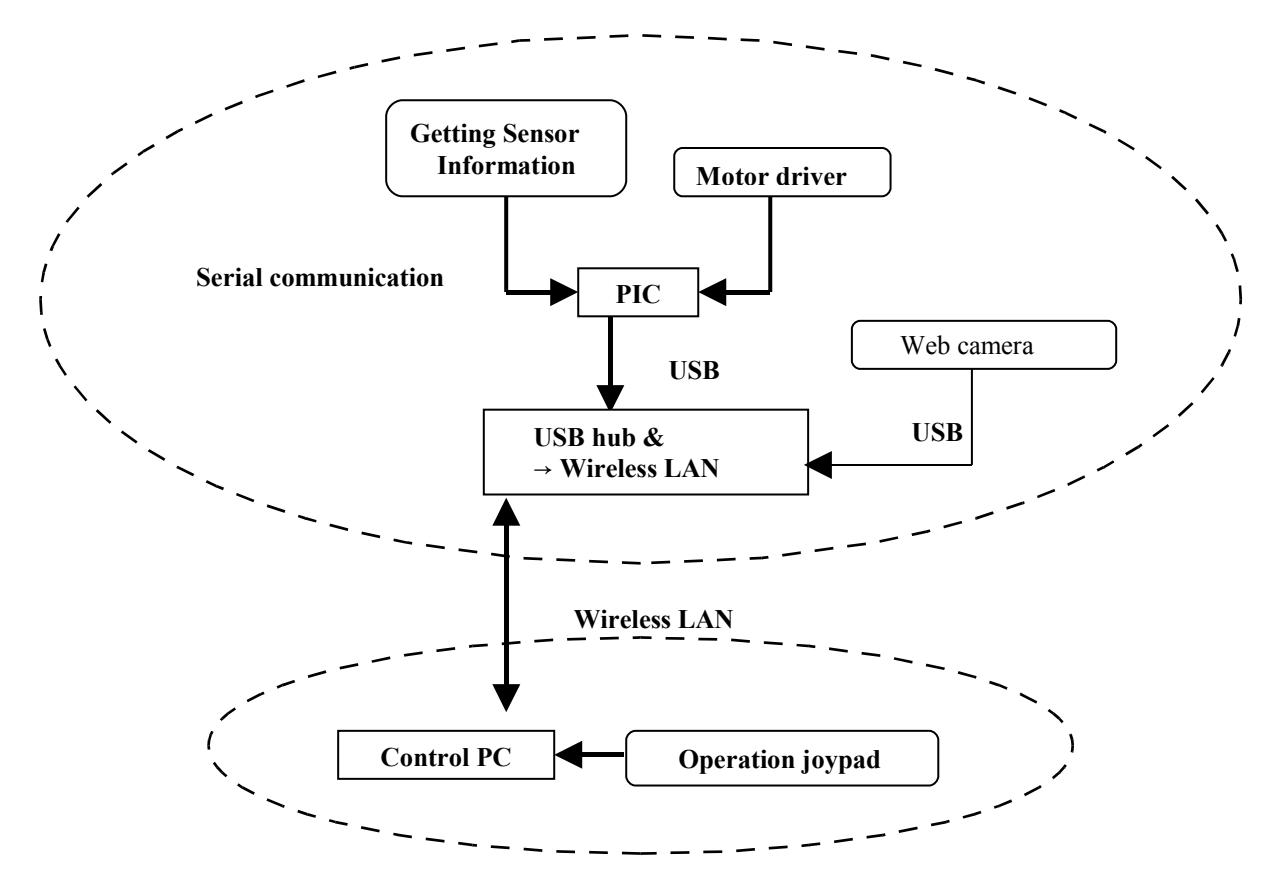
5. Map generation/printing
We use "handwriting" by information from web camera and sensor.
6. Sensors for Navigation and Localization
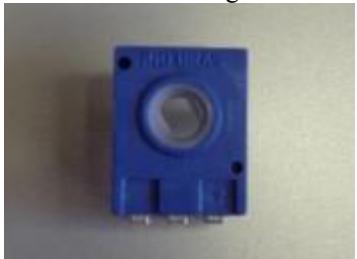
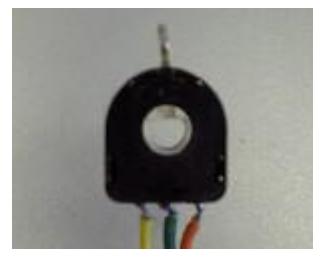
These measure an angle.
Angle sensor:
For know the situation of robot.
7. Sensors for Victim Identification
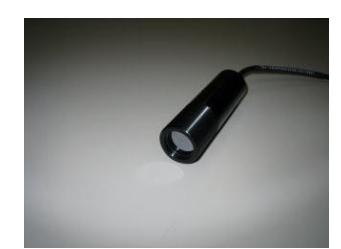
Microphone:For catch a information of a victim such as groan, crying and tapping.
8. Robot Locomotion
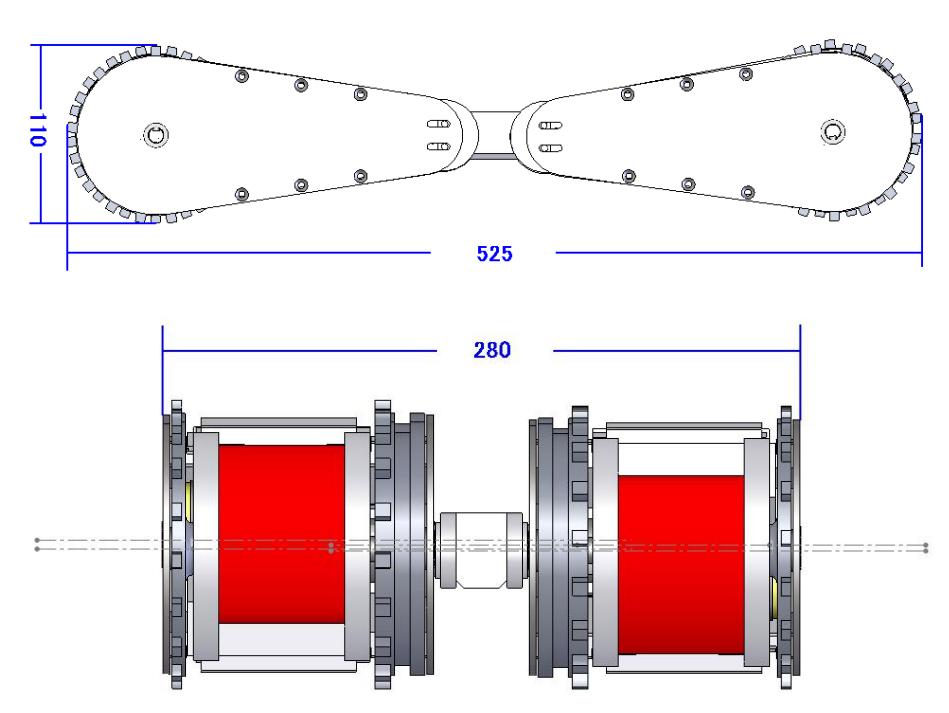
This robot has a 4 arm.
9. Other Mechanisms
Nothing.
10. Team Training for Operation (Human Factors)
This robot can passively transformation. If it is a small step, the vehicle driver can run going straight only. If big step, robot is get over by doing arm move.
11. Possibility for Practical Application to Real Disaster Site
In real disaster site, it is hard to operate this robot. But we think that if two people, a robot driver and a leader move a robot , a rescue operation becomes easy.
12. System Cost
Total cost is about 500000 Japanese yen.