RoboCupRescue 2010 - Robot League Team KMUTNB (THAILAND)
Aran Blattler, Tanachon Nitisuchakul, Karnchanan Karnchanachettanee, Nutdanai Champrasit, Kanchanok Bumrungjitt, Nattapong Kamdung, Pathompong Kaewnin, Watidth Poosudwan, Nonthawat Danwieng, Songklod Tunsiri, Supachai Tragoonsubtavee, Supat Ieamsupapong
King Mongkut's University of Technology North Bangkok (KMUTNB), 1518 Piboonsongkram Rd. Bangsue, Bangkok Thailand 10800
http://www.kmutnb.ac.th · http://www.youtube.com/watch?v=0oS7ljzcD7Y
Abstract This paper describes the information, construction and operation of KMUTNB rescue robot team from THAILAND. This robot team has joined the Thailand Rescue Robot Championship 2009 competition for the first time, however, this team received the first runner-up and the Technical Achievement Award from Mr. Adam Jacoff for being the only team, in the final round, which attempted entering and succeeded in the drop-out zone. Thailand Rescue Robot Championship 2009 competition invited Iran, Japan, German, Australian teams joined in the competition and international referees from World Robocup in the final day. The team planned to send two remote teleoperation robots and one full autonomy robot.
Introduction
The KMUTNB team consists of all freshmen and faculty members from King Mongkut's University of Technology North Bangkok, THAILAND. In 2009, there were 100 national teams competed in the preliminary round, KMUTNB team in one of the eight teams which qualified to enter the final round to compete with other invited international team from IRAN, JAPAN, AUSTRALIA, and GERMANY. Finally, the KMUTNB team succeeded by receiving the second place and Technical Achievement Award. The KMUTNB team is fully prepared for the Robocup Rescue competition in Singapore. The team hopes to get to know more people who are interested in making robots and give a chance to students to gain more experience and wider perspectives from other students and researchers in international level.
1. Team Members and Their Contributions
The "KMUTNB" Rescue Robot team from Thailand consists of students and faculty members from King Mongkut's University of Technology North Bangkok. The names and contribution of each member are:
Aran Blattler Operator
Tanachon Nitisuchakul Mechanical Design 3. Karnchanan Karnchanachettanee Mechanical Design 4. Nutdanai Champrasit Mechanical Design 5. Kanchanok Bumrungjitt Mechanical Design 6. Nattapong Kamdung Mechanical Design 7. Pathompong Kaewnin Mechanical Design
Watidth Poosudwan Mechanical Design & Programming 9. Nonthawat Danwieng Electrical Design & Programming 10. Songklod Tunsiri Electrical Design & Programming
Supachai Tragoonsubtavee Team Advisor 12. Supat Ieamsupapong Team Advisor
2. Operator Station Set-up and Break-Down (10 minutes)
From the experience in Thailand Rescue Robot Championship 2009 competition, the team realized that the quickness of set-up and brake-down process is necessary. The quicker set-up and break-down, the more time the team has for other tasks. The team's operator station is a case, which contains control devices inside i.e. notebook, LCD monitor, IEEE 802.11a wireless access point, UPS, printer and stopwatch. The team is well-prepared with devices and man-power, therefore, the set-up and break-down operations can be done within 7-8 minutes. Besides, the operation can be last for 30 minutes without external power supply.
3. Communications
The KMUTNB team uses wireless LAN based on IEEE 802.11a standard to communicate between the operator station and the robots. The operating range is approximated 150 meters in open area and about 100 meters for indoor.
Rescue Robot League
| Frequency | Channel/Band | Power (mW) |
|---|---|---|
| 5.0 GHz - 802.11a | Adjustable | 200 |
4. Control Method and Human-Robot Interface
The team tries to simulate the environment of the robot control similar to playing a computer game i.e. all information will be displayed on the screen and control the robot via joy stick for the convenience the flexible for controlling.
5. Map generation/printing
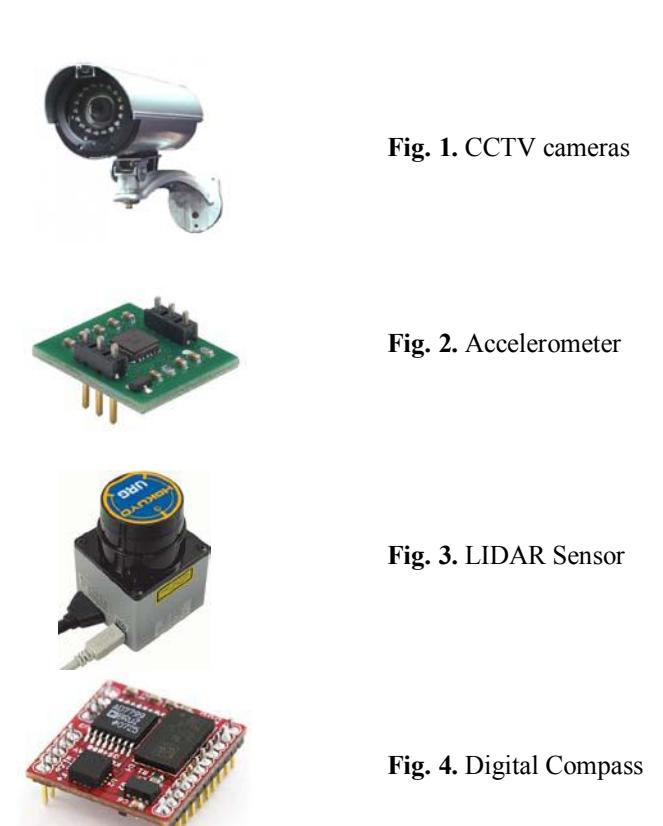
The KMUTNB's robots can generate 2D map automatically by using information from many sensors. It can be summarized as follows:
- The Accelerometer gives inclination information of the robot
- The Digital Compass shows direction of the robot
- The Encoder shows distance the robot moved
- The information from LIDAR Sensor gives distance between the robot and obstacles
All the data will be sent to the team's laptop for generating the map and displaying on LCD monitor. Consequently, this map will be printed in A4 paper.
6. Sensors for Navigation and Localization
The sensors for navigation and localization are listed as follows:
- CCTV cameras with wide-angle lenses
- 3 axis Accelerometer (Shared with map generation)
- LIDAR Sensor (Shared with map generation)
- Digital Compass (Shared with map generation)
- Encoder (Shared with map generation)
7. Sensors for Victim Identification
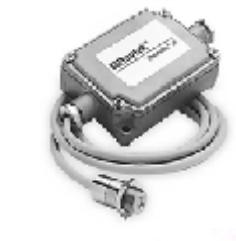
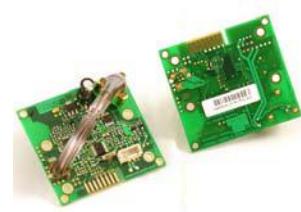
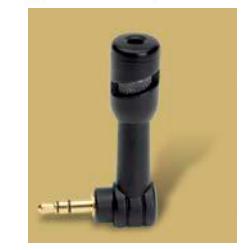
For victim identification, the team will analyze information from different kinds of sensor that located at robot surveying arm. For preliminary, the team will check the status of the victims with CCTV camera and measure victim body's temperature by utilizing temperature sensor. In some circumstance, this victim's temperature information will be used incorporated with data from CO2 sensor and surrounding's sound, which received via microphone, to analyzed the situation of the victim. The figures below illustrate the pictures of temperature sensors, CO2 sensor, and microphone.
8. Robot Locomotion
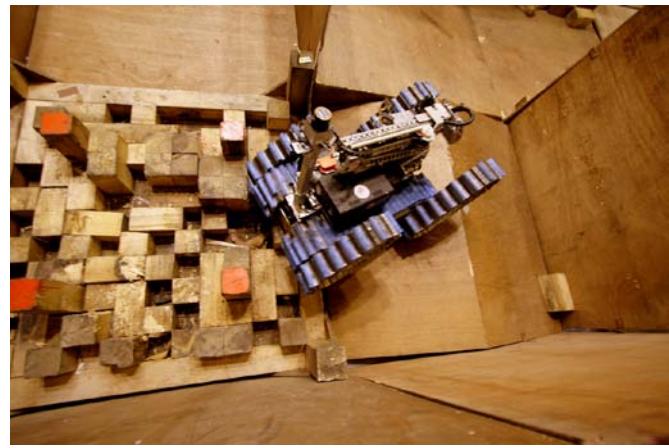
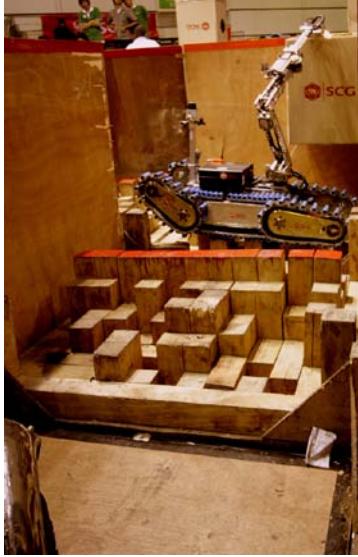
The KMUTNB's team has two different kinds of robot i.e. two remote teleoperative robots and one full autonomy robot. The remote teleoperation robot has two pairs of the caterpillar arm, front and back, powered by DC motor and transit to gear box to drive caterpillar arm in order to move in rough surface and overcome the obstacles on the way such as steep slope. For the full autonomy robot is similar to an automobile consist of four wheels powered by DC motor, the same as the remote teleoperation robots. The outstanding characteristic of this full autonomy robot is that it has a camera, that can be rotated automatically, connected to a column that located on the center of the robot. This robot can be operated automatically by using the laptop that located on its body.
9. Other Mechanisms
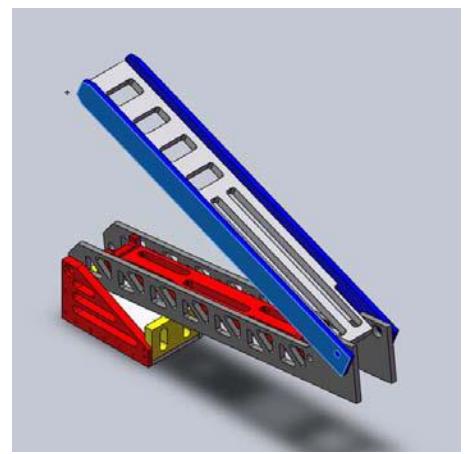
By using the engineering's principles, such as picking aluminum alloy as the material, using ball screw and rack, powering by high torque DC motor, to design the robot surveying arm of KMUTNB's remote teleoperation robot, this arm has ultra light weight, strength, toughness and high reliability.
10. Team Training for Operation (Human Factors)
The KMUNB's team has competed in Thailand Rescue Robot in 2009 and received the second place in the competition. The team consists of all freshmen who compete in the formal Rescue Robot for the first time. The team members have learned and continuously developed skills throughout the competition. The operator has practiced regularly to get familiar with the control of the remote teleoperation robot and must withstand the pressure from competition. Other team members are trained to work in team effectively since the success of the team will rely on every member on the team.
11. Possibility for Practical Application to Real Disaster Site
The KMUTNB's robots are expertise in moving into different surfaces of arena. For the practical application such as national security assistant, more financial support is needed in order to make more development on some parts such as more advanced sensor, better A.I. algorithm that can apply to real situation, and strength of some part of robots. Currently, Thai government is interested in this issue, however, further discussion is needed to make more in depth research in the near future.
12. System Cost
The KMUTNB team has three robots. Two of them are remote teleoperation robots and the last one is full autonomy robot. The cost for making these robots are:
System Cost
| Item | Cost |
|---|---|
| Body of robot | $1,000 |
| CCTV Cameras x 4 | $350 |
| Accelerometer | $100 |
| LIDAR Sensor | $2,200 |
| Encoder x 2 | $120 |
| Digital Compass | $100 |
| Temperature Sensor | $350 |
| CO2 Sensor | $350 |
| Microphone | $50 |
| Microcontroller and Others Electronics | $200 |
| IEEE 802.11a Wireless Access Point | $200 |
| LAN Video Convertor | $350 |
| Serial to LAN Convertor | $200 |
| Total Cost | $5,770 |
13. Lessons Learned
We have participated in Thailand Rescue Robot Championship 2009 competition for the first time. We have learned and gained more skills from the competition this year. The team has seen different perspective of making robot from other Thai teams and other international teams. The team believes that by attending this year competition in Singapore, all of the team members who are the freshman will gain more experience and see different perspective by sharing with other students from other parts of the world.
Acknowledgement
The KMUTNB team would like to thank to financial support from King Mongkut's University of Technology North Bangkok. Most of the tasks were conducted at the machining center, King Mongkut's University of Technology North Bangkok, Thailand.
The final manuscript of this paper is prepared by Supat Ieamsupapong.
Video
http://www.youtube.com/watch?v=0oS7ljzcD7Y
References
- Martin George Henry: Kinematics and Dynamics of Machines