RoboCupRescue 2011 - Robot League Team <Success_RMUTR (Thailand)>
Chunhawut Pathomkanokpong, Wittaya Kaewsuriyawong, Jakapan Hatachod, Alongkorn Kaewsujarit, Ratchaset Treepetch, Pipat Fagmee, Anulak Sanapong, Pichitpol Numnual, Nattapon Boonsanan, Jugkraphun Malaithong, Kearttipong Suwannarat, Nattapon Tessatan, Wutthikrai Buakaew, Kitthipong Poomphochana, Waraporn Bubpamala
Faculty of Engineering Rajamangala University of Technology Rattanakosin 96 Moo3 Phutthamonthon Sai 5 Rd., Salaya, Phutthamonthon Nakhonphathom, Thailand 73170
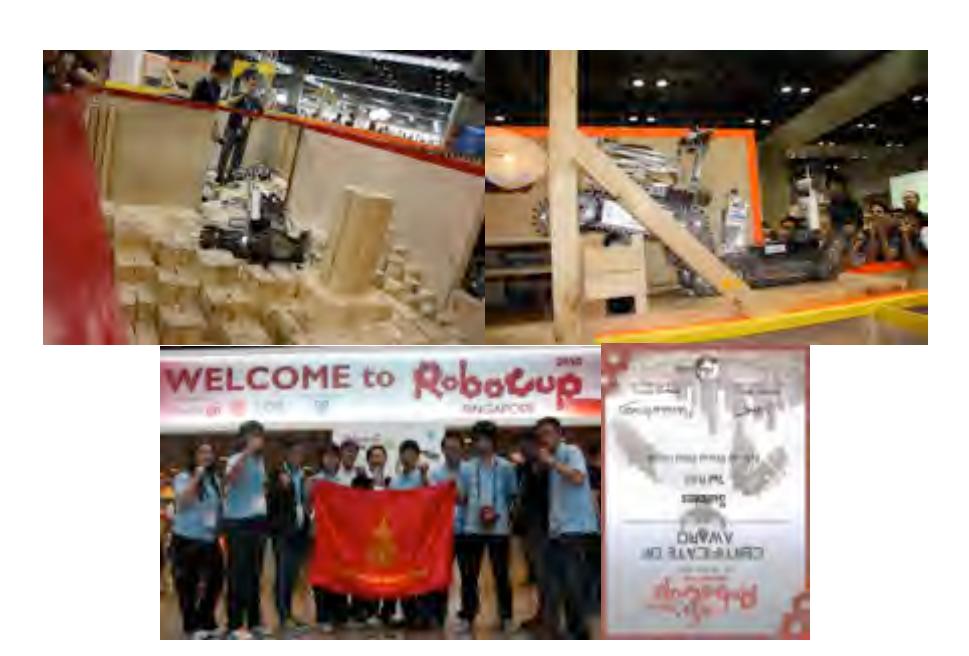
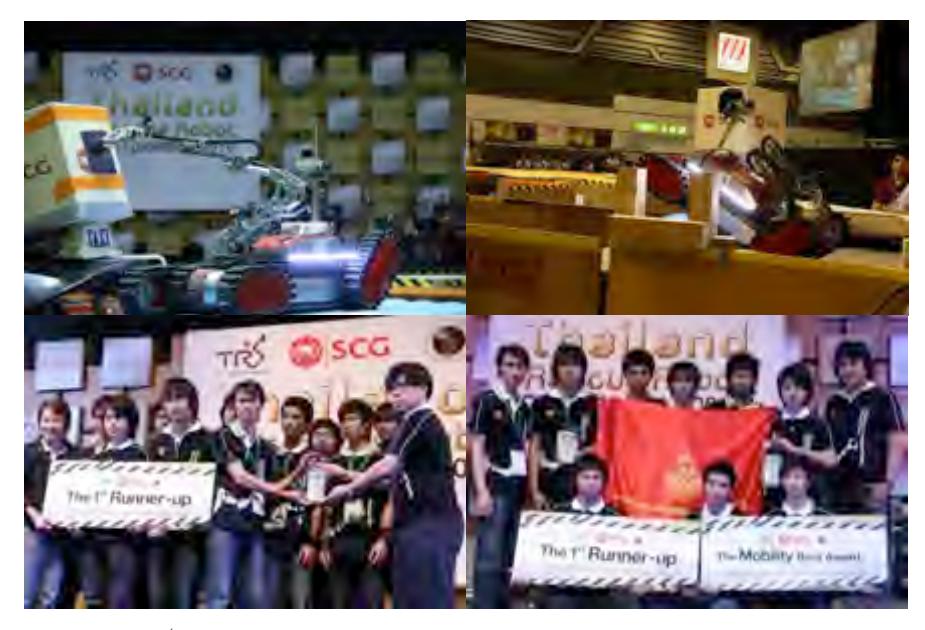
Abstract This paper describes the information, construction and operation of RMUTR rescue robot team from THAILAND. This robot team has joined the World rescue 2010 competition for the first time, in the name of Success_RMUTR team, this team got the 1st runner-up award from RoboCup 2010 (Rescue robot league) and the 1st runner-up award and the mobility best award from national competition 2010 (Thailand Rescue Robot Championship 2010). The team has two teleoperative robots and one autonomy robot. We will to also improve the ability of teleoperation, autonomy, and manipulation.
Introduction
Rescue robot competition is very popular in various groups of Thai student. In 2010, The RMUTR team has joined first times competition in RoboCup 2010 in Singapore [1] and won the Second Place in the competition. In the Thailand Rescue Robot Championship 2010 [2], sponsored by Siam Cement Group (SCG) and organized by Thailand Robotic Society (TRS), both secondary and vocational education has entered the competition more than 70 teams and 4 foreign teams competed. The RMUTR team has joined five times competition in Thailand Rescue Robot Championship (2006-2010) and can pass through the 8 team last 5 consecutive years. In three times later, we compete with international team in the final round (Japan, Iran, Australia, and Germany). The design of robots competing in the last contest shows very high level of diversity (please referred to http://www.thailandrescuerobot.org). Finally, the RMUTR team won the First Runner-Up and Best Mobility Awards in the competition. It time of opportunity to rising experience and developing skill in the international competition. RoboCup Rescue, recognized as the international competition and a very high honor for the team to join. The Rajamakala University of Technology Ratanakosin (RMUTR) decided send team to participate in RoboCup Rescue 2011 competition in Turkey.
1. Team Members and Their Contributions
The RMUTR Rescue Robot team from Thailand has 15 members. The names and contribution of each member are:
| 1. | Chunhawut Pathomkanokpong | Mechanical and Electrical Designs |
|---|---|---|
| 2. | Wittaya Kaewesuriyawong | Programming and Control Robot |
| 3. | Jakapan Hatachod | Autonomous Design and Programming |
| 4. | Alongkorn Kaewsujarit | Autonomous and Mechanical Designs |
| 5. | Ratchaset Treepetch | Mechanical Design and Manufacturer |
| 6. | Pipat Fagmee | Mechanical Design and Manufacturer |
| 7. | Anulak Sanapong | Mechanical and Electrical Designs |
| 8. | Pichitpol Numnual | Mechanical and Electrical Designs |
| 9. | Nattapon Boonsanan | Electrical Design and Programming |
| 10. | Jugkraphun Malaithong | Manufacturer and Mechanism Assembly |
| 11. | Kearttipong Suwannarat | Manufacturer and Mechanism Assembly |
| 12. | Nattapon Tessatan | Manufacturer and Mechanism Assembly |
| 13. | Wutthikrai Buakaew | Team Advisor |
| 14. | Kitthipong Poomphochana | Team Co-Advisor |
| 15. | Waraporn Bubpamala | Team Co-Advisor |
2. Operator Station Set-up and Break-Down (10 minutes)
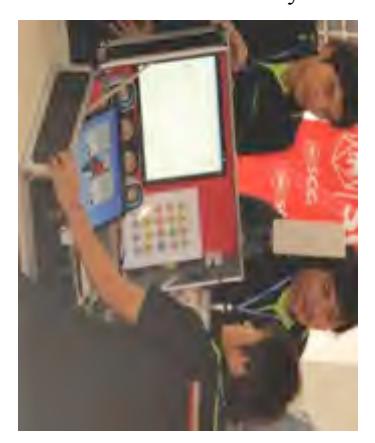
The operation station need for speed and reduce errors in the competition. We've designed a Mobile Control Pack to install equipment and control system unit that including; notebook, monitor, UPS, access point, speaker and joystick. When fight just plug and switch on the unit can used immediately.
3. Communications
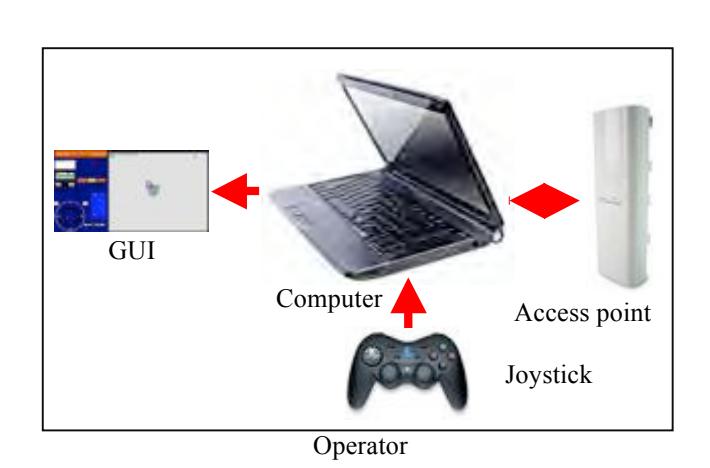
The RMUTR team use wireless LAN to communicate between operator and robot. In RoboCup 2010 in Singapore, we found that the access point has the range of the working distance is within 200-m for outdoor and 100-m in the building. The wireless LAN based on IEEE 802.11a standard, the main communication system: for controlling robots, receiving video streaming from cameras on robots, and getting sensors feedback for locating the status of robots on computer monitor as well as for the automatic map generation.
| Rescue Robot League | |||
|---|---|---|---|
| SUCCESS_RMUTR (THAILAND) | |||
| Frequency | Channel/Band | Power (mW) | |
| 5.0 GHz - 802.11a | Adjustable | 400 |
4. Control Method and Human-Robot Interface
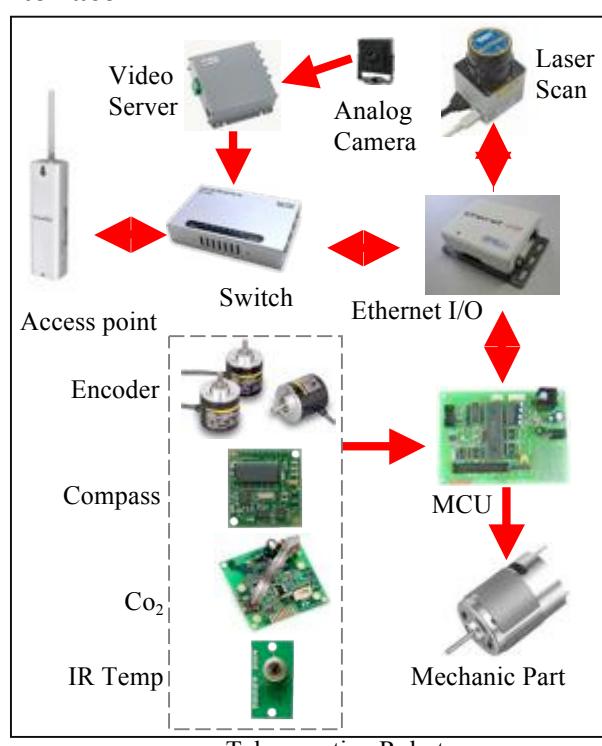
The robots main control is based on one MCU (PIC microcontroller (16F877) 40 pins). Fig.4 depicts the schematic of the control system which has two main tasks as follows:
- 4.1 Used for receiving data for identifying status of the robots and create map automatically as shown in Fig.4 This information will be shown to the robot operator via a computer monitor.
- 4.2 Used for sending data for controlling the movement by sending the signal to the drive control for controlling DC motor at various locations on the robots The RS-232 communication system will be used for sending and receiving data of MCU. Therefore, there must be a serial server to translate RS-232 system to Ethernet system.
5. Map generation/printing
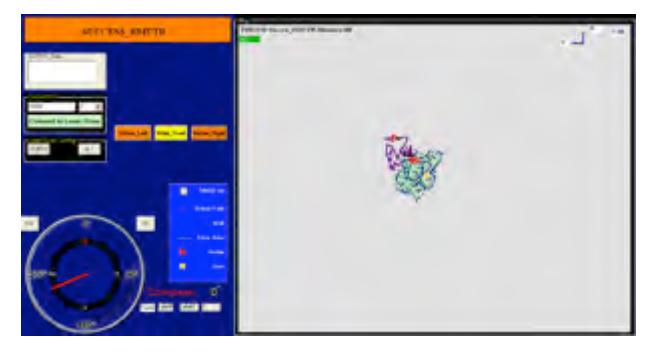
The several of sensors are installed on each robot in order to get the data for monitoring and creating the 2-D map. The robot direction and location for searching victims was created automatically shown on the computer monitor (Fig.5). The map is generated by using the information from the distance the robot moved from encoders, direction of the robot sensed by digital compass, and distance between the robot and obstacles from Laser sensors.
6. Sensors for Navigation and Localization
Sensors, used for guiding the robot movement and identifying the location of the robots, shown in fig. 4 (Teleoperative Robot) and described as follows:
6.1 Encoders: Use to measure the distance that the robot moved and use this information to plot on the software along with other type of sensors.
- 6.2 Digital compass module[3]: Use to measure the direction of the robot and use this data to plot along with the distance measured from the encoders.
- 6.3 Laser Scan sensors[4]: Use to measure the distance between the robot and obstacles and use this information to plot on the software.
7. Sensors for Victim Identification
On each robot, many types of sensors used for checking and analyzing the victim found by the robot. These sensors are listed as follows:
- 7.1 IR temperature sensor [5]: Use for checking the temperature of victim found for further analyzing whether the victim still alive or not. The temperature value measured by this kind of sensor will be sent back to computer monitor of the operator.
- 7.2 CO2 sensor [6]: Use for measure CO2 of victim found for checking the aspiration of the victim.
- 7.3 Microphone: Use for detecting sound of the victim found. Real-time video cameras: Use for investigating of the victim found and send pictures back to the operator for further analyzing the victim.
- 7.4 Camera: Use for identification the victim such as color, characteristic, motion.
8. Robot Locomotion
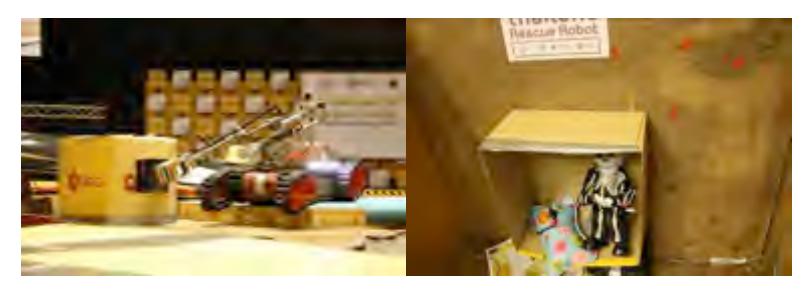
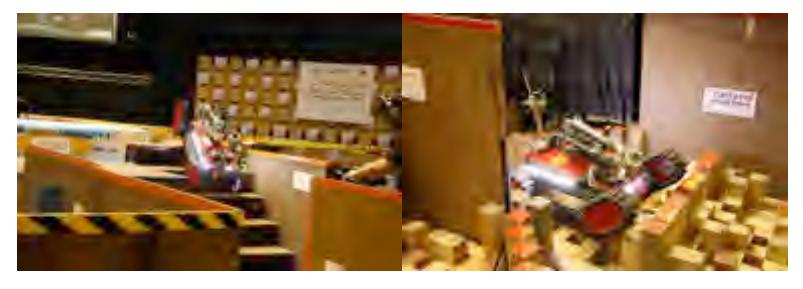
The RMUTR Robot Team has two teleoperative robots and one Autonomous Robot like shown as Figure 7. For the teleoperative robots; the driving system, use the tracking for movable on a variety of areas such as the rugged, slope ramp, the different step and stairs. The high strength materials used to construct the main body. The rubber used as components of a robot to help support and help in the adhesion. The robots have 6 tracks and 4 flippers.
9. Other Mechanisms
The robot mechanical arm has 6 joins easy to check the victim and can be extendible length 1.5 meters; the end point built in camera access and several of sensors. The broader views obtain from twin-camera at the rear side help to identifying the direction and location of victims. The gripper takes and moves some items such as water bottle which weight not more than 1 kg.
10. Team Training for Operation (Human Factors)
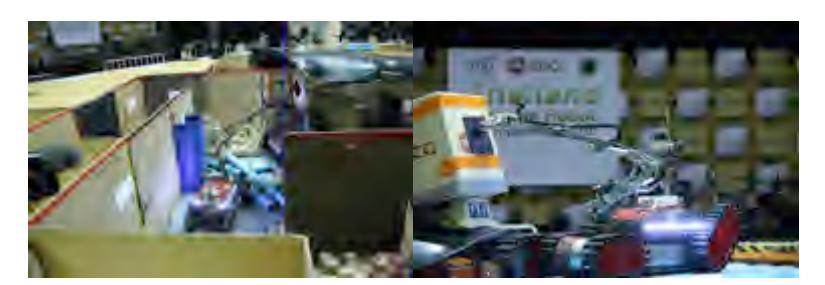
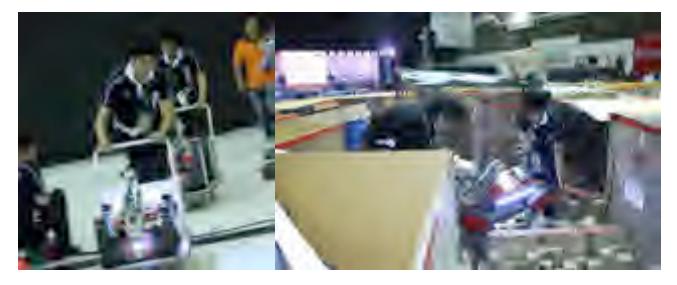
The RMUTR robot team has competed in RoboCup 2010 in Singapore. We have learned and continuously developed our skills from 2010. We received the best training through the experiences from real competition in each task given in the competition requires.
11. Possibility for Practical Application to Real Disaster Site
The problem of unrest in the southern hemisphere is the main problem of Thailand. Since the terrorist bomb, burn or destroy all such construction. The threat to operational staff, life interest or injured during the mission. The development of the Thai Rescue Robot can actually use to take a significant help the performance of the staff. The security talent motion of RMUTR Robots, strength and durability, in a practical implementation.
12. System Cost
| Structure of robot and drive train | $ 2,500 |
|---|---|
| Sensors | |
| - Encoders x2 | $ 120 |
| - Digital compass module | $ 75 |
| - IR Temperature sensor | $ 100 |
| - Laser Scan sensors | $ 2,100 |
| - Microphone | $ 10 |
| - Analog camera x5 | $ 380 |
| Controller and electronics | $ 1,500 |
| Communication system | |
| - Access point IEEE 802.11a x2 | $ 540 |
| - Video server 4 Ch | $ 700 |
| - Ethernet IO x4 | $ 300 |
| Total Cost | $ 8,325 |
13. Lessons Learned
We have participated in RoboCup 2010 and got experiences in competition, learned how improve our robot in this year. More importantly, our team learned that cannot be successful without the cooperation of every team member. Our team shows the performance in the time over in final competition to other team to find the special victim, on the top stair so that this area has 3 rollers, it difficult move to victim. We use 2 robots to collaboration to find the victim as shown in this link: Rescue Robot Collaboration [7].
References
References
- Result: RoboCup 2010, Robot Rescue League; Available: http://www.robocup2010.org/competition_League.php?c=2&l=7&t=results [2010, June 26]
- Result: Thailand Rescue Robot [Online]. Available: http://www.thailandrescuerobot.org/2010/home.php [2010, December 25]
- Deveantech Ltd.: CMPS03 Magnetic Compass [Online]. Available: http://www.robot-electronics.co.uk/shop/Compass_CMPS032004.htm [2010, January 12]
- URG-04LX Scanning range finder (SOKUIKI sensor) Technical Specification [Online]. Available: http://www.hokuyo-aut.jp/02sensor/07scanner/urg_04lx.html [2010, September 12]
- TPA81 Thermopile Array Technical Specification [Online]. Available: http://www.robotstorehk.com/sensors/doc/tpa81tech.pdf [2010, January 12]
- SenseAir´s CO2-sensor in cars –a low cost product that works! [Online]. Available: http://www.senseair.se/PressRelease/ep_car_co2_engine_hemsida.pdf [2010, January 12]
- Rescue Robot Collaboration [Online] Available: http://www.youtube.com/watch?v=_NJOxyeZchQ&feature=player_embedded [2010, December 15]