GraceBand Team Description Paper for RoboCup 2016
Mohammad Mazinani, Mohammad Ali Kamkar, Laleh Asadi, Mehdi Torshani, Mohammad Ghasemi, Fahimeh Sharahi, Parto Eshraghi, Saina Eslami Boromand, Parisa Behnod, Isan Sabzekhah, Sioneh Shahverdian, Soha Ghne
Mehrnami Novin Research Center
Abstract This report is to explain and introduce the GraceBand team. All the precise specification of robotic capabilities including image processing and simulation techniques for surrounding environments has been discussed as well. Our main goal is to find a simple, yet efficient image processing algorithms to improve the humanoid robot who is using it in creating the right understanding of the whole environment and that helps the robot to take the best decision in the shortest possible time.
1. Introduction
GraceBand team members began its activities in the field of robotics since 2006. During these years they have attended in different professional leagues from 2D/3D simulations to real helper and etc under different names (such as Sama3D, Mars, GPC, RCMasters, Ariana & AVA …). And from 2015 this team has began its very specialized job on two Standard Platform League (SPL) and also kid size humanoid robots leagues. The platform has been used in kid size humanoid robots league is Darwin robots. In this report we will consider the methods and image processing algorithms to simulate the world model for these robots. These methods play an important role in robot's decision-making. Before considering the algorithms to become more familiar with the platform it is necessary to review the structure of hardware and software of the robots.
2. Software Structure
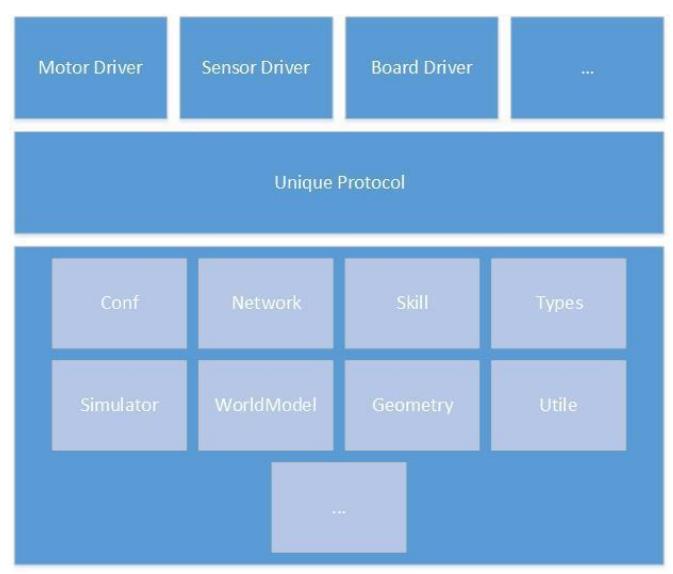
Considering probable existence of various platforms in humanoid teams; the main software structure that has been designed in C++ is categorized in three main sections: hardware drivers, driver interfaces and upper layer that is responsible to synchronize different hardware parts with the upper layer.
In this structure per each platform it is only the hardware driver layer that is going to have the most changes and modifications and almost all the other layers will remain constant without any change.
3. Hardware
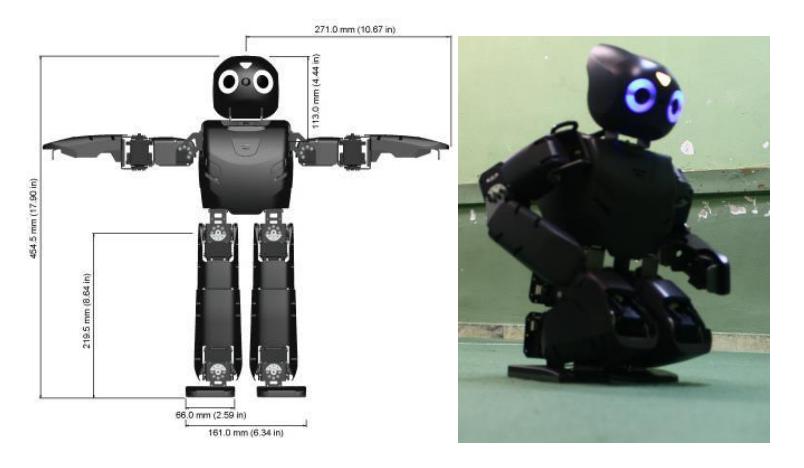
Team's selected platform is Darwin robots. This robot has 20 degree of freedom and approximately 45 cm height and it is fully compatible with the new rules of these competitions has been announced on the match website.
4. Image processing
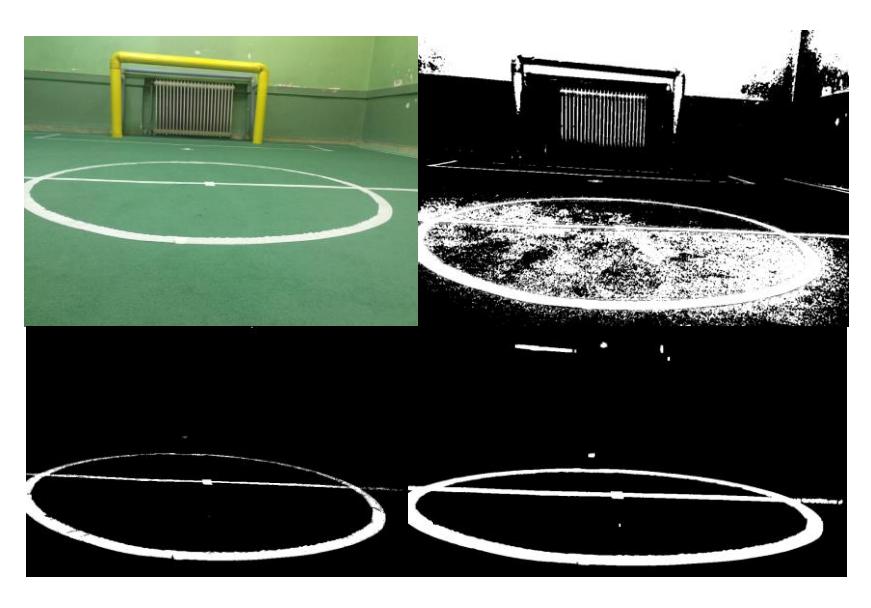
The image processing of the robots is obeying of a 4 layers model. The first layer is for pre-processing and through the aid of different operators and different filters like edge detection methods, line detection and picture noise elimination provides the best resolution in detecting different properties and states of the picture. In second stage we are looking for specified properties of the pictures those help us on third stage to find out dimensions of the objects on the play zone in correspondence with the relevant defined goals. In the last stage outcomes will be compared with the available samples that has been clarified earlier. This comparison result will be logged into the system. In this model one of the main properties we are looking for is to detect the lines of the play zone that leads us to have the play zone limits. After achieving this zone and ignoring the continue of the pictures and transferring the resulted color codes to a constant code we will let the robots to limit their sight and consider only on the play zone and inside objects. This possibility also helps in detection of the approximate place of the gates.
5. Simulation
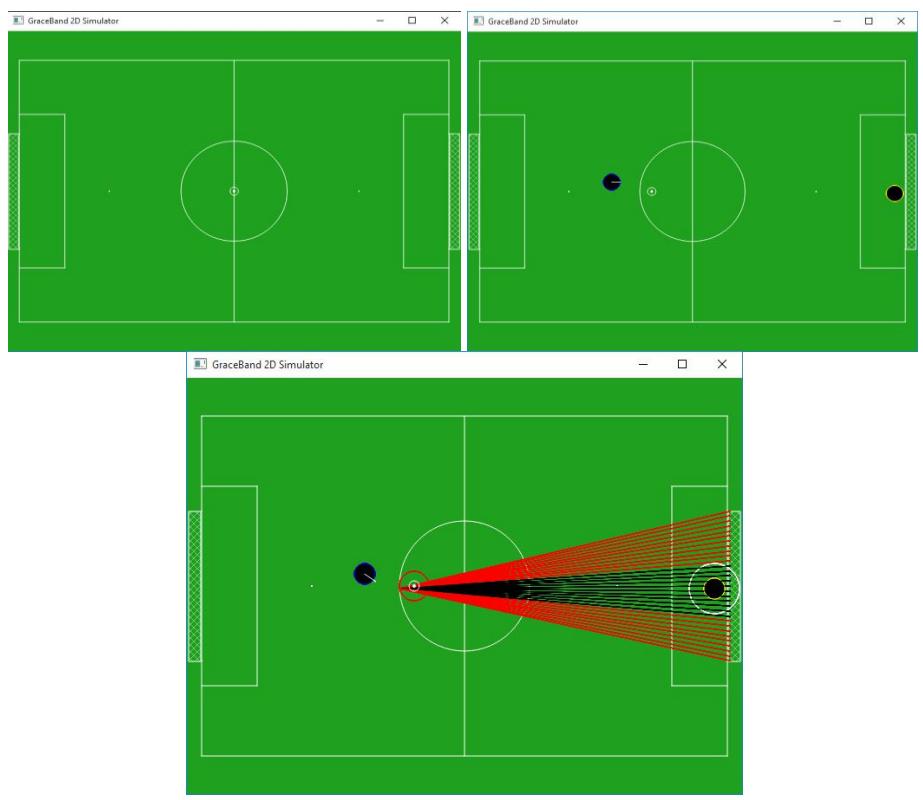
To simplify the surrounding world model, a 2D model of the play zone will be drawn for the robot that includes the place and estimation of all the entities he has observed and also understood from other robots. This information consists of x and y dimensions of the robots and also the place of the ball. In the simulation algorithm that has been tried to estimate all the possible dimensions of the objects have been observed with the robot view and are currently out of robot's sight. This will help robots to have the minimum turns to find out an object in the zone and this is really important for the robots by saving time and increasing the speed of detection. The way we have chosen is the limited expansion method in corresponding with the average speed of the object in relation with the time. This experience achieved through attending the 2D soccer simulation competitions during the previous years and helps a lot to take the optimum decisions with the optimum price and also to examine the operational algorithms on the robots precisely.
References
- https://www.robocuphumanoid.org, last accessed February 2015.
- http://www.robotis.com/xe/darwin_en
- Qing-E Wua, Xue-Min Pang, Zhen-Yu Hana Fuzzy automata system with application to target recognition based on image processing , Computers and Mathematics with Applications 61 (2011)
- Amogh Gudi, Patrick de Kok, Georgios K. Methenitis, Nikolaas Steenbergen Feature Detection and Localization for the RoboCup Soccer SPL