Team Description Paper for Team I-KID Robocup2017
Xu Xiaofeng, Zhu Lifu, Zhou Wentao, Yan Bixi, Wang Jun, Zheng Qingyu
Beijing Information Science & Technology University, Beijing, China
Abstract In this Team Description Paper, we describe the main changes of our humanoid robot for RoboCup 2017 Japan. We mainly illustrate the new designed architecture of our robot for the new rules, the improvements of hardware, mechanical structure and algorithm that aim to improve the performance of the robot.
Introduction
Founded in 2010, the I-KID team is composed of over twenty students including undergraduates and postgraduates at different levels. The machine vision, as one of core technologies in the field of robot, has become the important study direction of the Instrument Science and Technology discipline opened in our university. Since 2011, when the I-KID team participated in the China Robot Competition and The RoboCup China Open 2011 for the first time and won the First Prize (Runner-up) and got the first in the Soccer and Race Competition in Kid-size group. We have made great achievements and won prizes in some competitions at home and abroad in the following six years, including the 2012 Mexico Robocup Competition, 2013 Netherlands Robocup Competition, 2014 Brazil Robocup Competition and various robot competitions held in Beijing, such as the University Robot Contest of five provinces (municipalities and autonomous regions) in North China, and domestic competitions jointly held by both sides of Taiwan Strait etc. We have ceaselessly improved and updated the software and hardware so as to enhance the level of our robots in accordance with the competition rules of Robocup.
Overview of the System
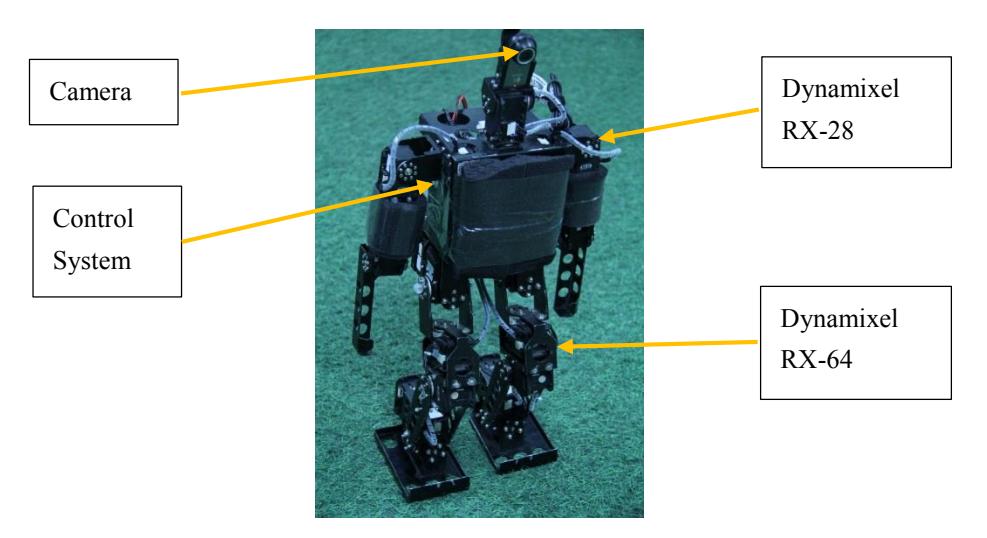
Our new robot is shown in Fig.1. It has twenty degrees of freedom (DOF), six RX-64 in each leg, three RX-28 in each arm and two RX-28 in the neck. Compared with old robot, the new one removes the DOF in waist, this change makes mechanical structure more stable and achieve a faster walking speed with 20% improvement.
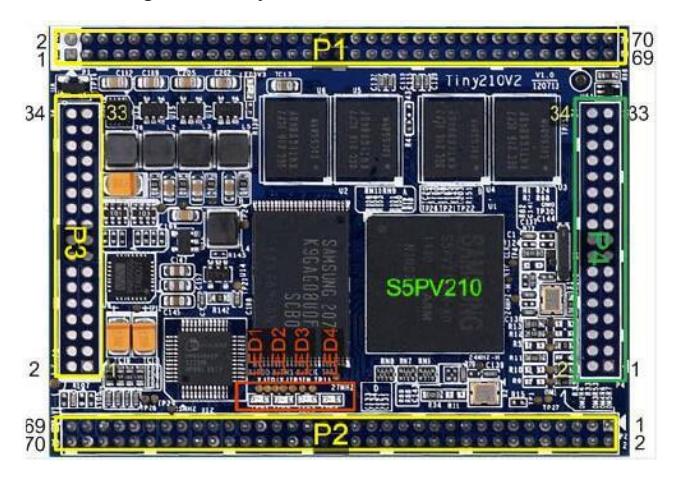
The newly designed robot makes a significant improvement with the computing speed. PC104 computer is replaced with a cortex-A8 based CPU Samsung S5pv210, depicted as Fig.2. The processor clocked at 1GHz does not only exceed in frequency, but also in power consumption. 512MB memory combined with 1G FLASH is sufficient to load any algorithms for soccer, such as fast image processing, particle filter based world modeling. High data load on USB bus with YUV space image, which means noise vulnerable for transfer, is exchanged with smaller sized JPEG alternatives. While on PC104 computer, the time consumption for JPEG decompression is unable to fit system requirement. S5pv210 is capable to decode the image at little cost, powered by its hardware JPEG codec.
Improvements
The ultimate goal of the RoboCup is,' By the year 2050, develop a team of fully autonomous humanoid robots that can win against the human world soccer team'. Therefore, the robot competition is closing to the conditions of the human football match gradually in football field, including material, dimensions, marking, signs and football. According to these changes, we made some improvements of visual algorithm, mechanical structure, motion control and algorithms and here is a brief introduction.
Vision Algorithms
In terms of the changes of demands of soccer, we have employed an identification method of object ball which integrates the constraint of one color feature with the geometric constraint on the basis of the visual sensors built inside the iKid robots. The change of color features of soccer from one single color to multicolor has made the color feature more distinct. Therefore, the constraint of color features (including the area and proportion of color blocks) could be used to identify the object soccer. The monochromatic block maintaining low proportion in the overall color blocks and two or more color blocks (less than four) simultaneously identified by robots which also maintain low proportion could be regarded as the target candidate area of soccer because they could meet the requirements of the constraint of color features. The geometrical shape will be employed to further analyze the target area so as to enhance the reliability of detection result. The roundness feature of candidate area in images should be further analyzed because the image of soccer captured by robots is round. Under the condition that the image segmentation has been finished on the basis of color features and the candidate area has been acquired, we have introduced an improved rapid computing method, the Hough transform detection of circles, to dramatically reduce the calculation amount and improve the detection efficiency. The detection method could highly accurately identify the object soccer with less calculation amount and could be easily realized. The real-time tracing of object soccer could be realized on the present platform of soccer robots, thereby improving the competition performance of our robots.
According to the change of competition rules, the color of goal should be painted with white color. For this reason, we have improved the original calculation method of goal so as to eliminate the interruptions of the same color of the rectangle marking line and to help robots rapidly locate the goal. Firstly, we divide the image into the target area and non-target area on the basis of green color. The area corresponding to the green color is non-target area. Next, the goal identification method which integrates the constraint of one color feature with the geometric constraint is employed in the target area. The white blocks which have been identified by robots and could meet the requirements of some fixed ranges are regarded as the target candidate area of the goal. The geometrical shape will be employed to further analyze the target area so as to enhance the reliability of detection result. Under the condition that the image segmentation has been finished on the basis of color features and the candidate area has been acquired, the rectangle features in candidate area in image will be further analyzed in terms of the fact that the image of goal captured by robots is rectangular. Therefore, those color blocks which are selected in target area and meet the above conditions will be marked as the goal. This is an easy calculation method which also enjoys less calculation amount.
Mechanical Structure
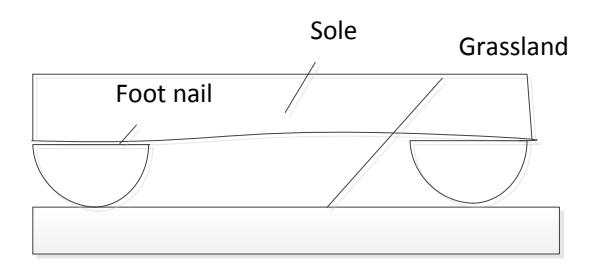
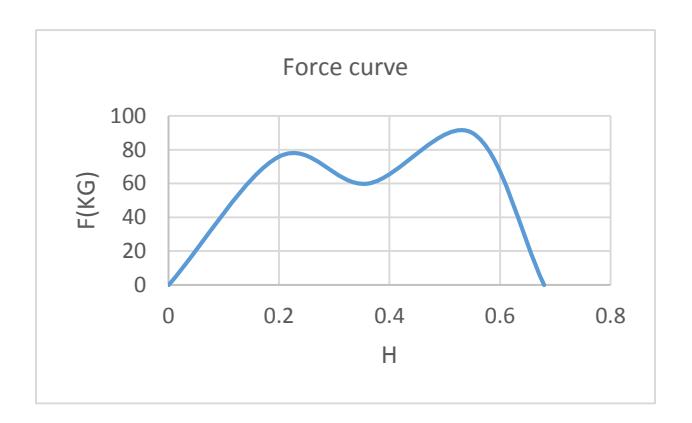
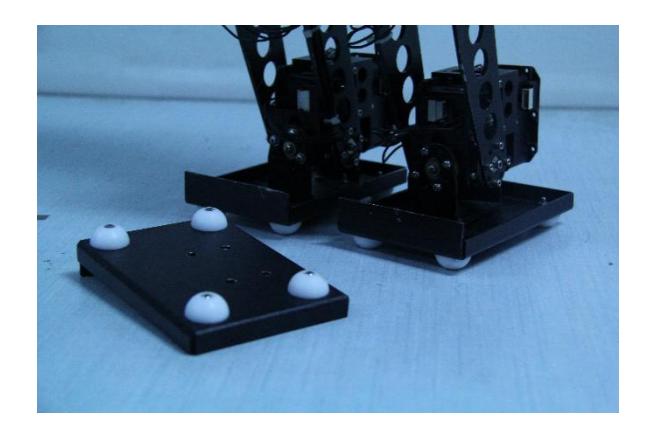
In accordance with the competition rules, the original grassland is replaced by the meadow. Therefore, we have improved the mechanical structure of robot's feet by replacing the contact surface with contact points, thereby reducing the effect of clearance between robot's feet and the rough surface of meadow (see the Fig. 3, Fig. 4) and enhancing the stability of robots when they walk on the meadow. Supporting points should be established at four corners of robot's feet because the gravity center of iKid robots is focused on the foot center and the curve of bearing force in vertical direction is featured by symmetrical double peaks when they work (see the Fig. 5). For this reason, we have established four touch points on each foot of our robots. Taking the friction coefficients between different meadows and nails under their feet as well as the optimum strength points into account, we have confirmed the location, size and material of nails through numerous experiments (see the Fig. 6).

Motion Control
The improvements on gait: it used to be three dimensional linear inverted pendulums to generate three-dimensional model on foot, drop center (ZMP) walking in the foot area, the way of walking is active and it was changed to passive finally. Virtual slope is a kind of method of full power to walk on the basis of the principle of passive walking. It compares walking on flat ground to the passive walking on a slope. Swinging the leg and the proportion of legs will be shortening with every step of swinging. As a result, the center of gravity could be lowered. In every ground collision, the potential energy reduced by system and the energy of the swinging leg collision loss is equal, of which the function is the same with the slope in passive walking. So we call it as the method for virtual walking slope. Because the robot's leg can not be shorten infinitely, as shown in Fig. 7, Fig. 8, supporting legs replenish its energy by elongating in swinging. In this way, the center of gravity of robot can stay in the same level in every collision and the robot can walk more smoothly.
The improvements on Steering gear. The RX series of steering gear are used in the robots from I-KID team and gradually upgraded to MX series of steering gear. the comparison of the MX series of steering gear and RX series of steering gear is shown in Table 1.
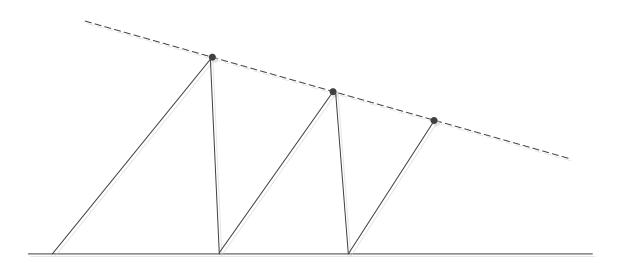
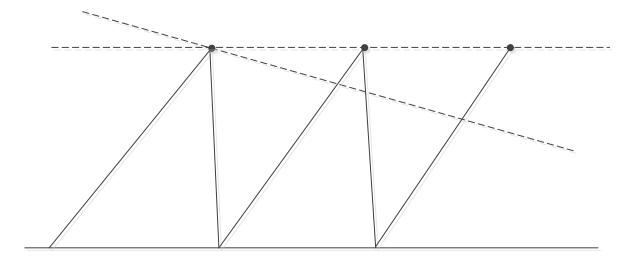
Table 1. Comparison of Dynamixel MX-64 and RX-64
| DYNAMIXEL MX-64T | DYNAMIXEL RX-64 | |
|---|---|---|
| Weight | 126g | HNO50N101 125g |
| Operation Voltage(V) | 12/14.8 | 14.8 |
| Stall Torque(N.m) | 6/12(V) | 4.0(14.8V) |
| Stall Current(A) | 4.1/5.2 | 2.1 |
| No Load Speed(RPM) | 63/78 | 49(14.8V) |
| Minimum Control Angle | About 0.088 degrees × 4,4096 | About 0.29 degrees × 1,024 |
| Operating Range | Actuator Mode: 360 degrees | Actuator Mode: 300 degrees |
| Operating Voltage | 10-14.8V(Recommended) | 12-18.5V(Recommended) |
Conclusion
In this article, we described some structural systems, including mechanical structure, the improvements on vision, gait and feet. And we have made a detailed comparison of the control accessories in the future and nowadays. We will adopt better ways to improve the flexibility and stability of the robot. I-KID will provide a referee knowledgeable of the rules of the Humanoid League during RoboCup 2017 Japan and will participate in this game as schedule.
References
- Bi Junxi, Xie Ning, Chen Shuo, Ren Kaike, Shang Tian, Lou Xiaoping, Yan Bixi, Zhu Lianqing.: I-KID: Team Description Paper for Team I-KID RoboCup2014(2014).
- Bi Junxi, Tan Xiaofeng, Guo Yunkai, Xie Pengcheng, Zhang Jiwen, Lou Xiaoping.: I-KID: Team Description Paper for Team I-KID RoboCup2013(2013).
- Xu Xiaofeng, Wang Jun, Dong Ying, Xie Ruiqin.: Research on detection method of humanoid soccer robot target ball, Robot Technology and Application, 2016.
- Zhang Chunlin, Cui Laiyou, Tan Cheng, Wang Guangqun, Kong Linjia.: Biomechanical Measurements and Analysis on the Sole of Human Foot, Beijing Institute of Technology, 2013.
- Yuan Gang, Zhang Muxun, Zhang Jianhua.: The measurement system of dynamic foot pressure and its clinical application, Chinese Journal of Rehabilitation, 2013.