Unbounded Designers Teen & Kid Size Team Description Paper Humanoid League, Robocup 2019, Australasia, Sydney
Mohammad Reza Reiahi Dehkordi, Javad Rahmani, Mohammad Hossein Rezayat, Soroush Abdellahi, Omid Mahdizadeh, Mohammad Jannesari, Hossein Babaei, Mahyar Shokraeian, Satyar Salehian Dardashti
Islamic Azad University Isfahan Branch, Shahed Mechatronics Robot Lab, University Blvd, Arqavanieh Blvd, Jey Street, Isfahan, Iran
Abstract In this paper, a brief discussion about preparation processes and development of Islamic Azad University, Isfahan branch, in the field of child and teen size humanoid robot for participation in RoboCup competition in Sydney, 2019, has been presented. The team has four sections: mechanics, balance keeping, machine vision, and learning algorithms. These teams have focused their knowledge on the subject and the results will be discussed in the rest. The main aim of this team is to make an open source robot.
Keywords: RoboCup 2019, mechanical design, keeping balance, machine vision, machine learning.
1- Introduction
In 2015, the Unbounded Designers team at the Islamic Azad University, Isfahan branch, initiated research and activity to develop humanoid robot in Kid and teen size and could obtain the first rank in the RoboCup competition in teen size. Also, in 2017, they showed a profitable performance in Japan's RoboCup 2017 and Thailand's Robocup-ap 2017 competition.
The unbounded designersteam have focused on the following fields to prepare for the Robocup competition in Sydney:
- Analyzing and using FSR sensors in each foot for keeping balance.
- Development of machine vision algorithm.
- Analyzing, designing, and exploiting machine learning algorithms.
- Development of the robot's decision making and behavior.
2- Hardware
(This is a section heading with subsections below)
1-2- Mechanical Design
Our platform is a fusion of Baset Pazhooh Tehran's commercial platform for teen and kid size [1], and Unbounded Designers platform designed in 2016. In our new design, we have tried to solve previous design's problems For example, a shielding design for shoulder motors to prevent stroke when it falls, designing a new foot sole to use FSR sensors, and more. Hence, the final design is complementing the aforementioned two.
The designed robot (Fig. 2), has the size of 85cm, 6 degrees of freedom for each foot, 3 degrees for each hand and 2 degrees for the neck, and is in accordance to 2018 rules [2]. In this design, MX-28, MX-64, and Dynamixel MX-106 motors are used to provide the torque needed for walking, jumping shooting and etc. For RoboCup 2019, Sydney, Australasia, the Unbounded Designers team will use a commercial Baset Teen-Size platform. Table 1 describes the characteristics of two platforms.
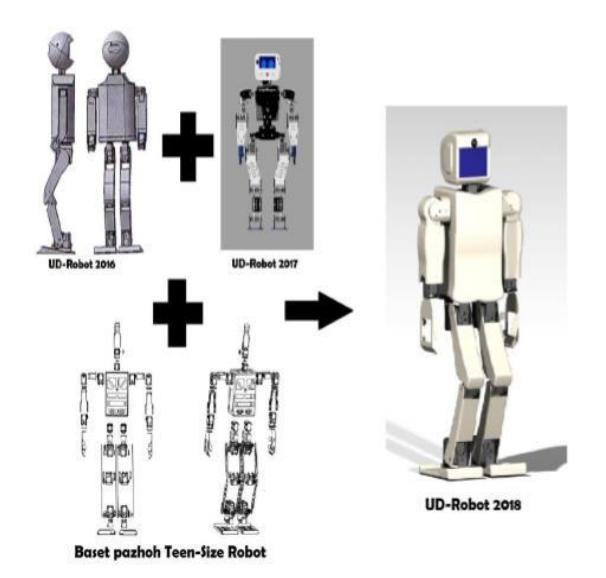
Table 1 describes the characteristics of two platforms.
| Baset Pazhoh Robot | UD-Robot | |
|---|---|---|
| Height | 84 | 85 |
| Weight | 6.3 | 6 |
| Camera | Logitech C905 | Logitech C905 |
| DOF | 20 | 20 |
| Actuators | Dynamixel MX-106 & MX64 & | Dynamixel MX-106 & MX64 & |
| MX-28 | MX-28 | |
| Processing Unit | QutePC-3000 (QPC3000) [3] | Intel NUC7I7BNH-/X1D [4] |
| 2 GB DDR3 memory | 2 GB DDR3 memory | |
| 64 GB SSD | 64 GB SSD + BeagleBone[5] | |
| OS | Windows 8.1 | Windows 8.1 |
| Battery | Li -Po 11.1 V – 5000mAh |
Li -Po 11.1 V – 5000mAh |
2-2 Electronic design
The electronic part of the unbounded designers robot has been made of several sections, each section has its own duty. These sections will be discussed individually.
1-2-2 Driver board
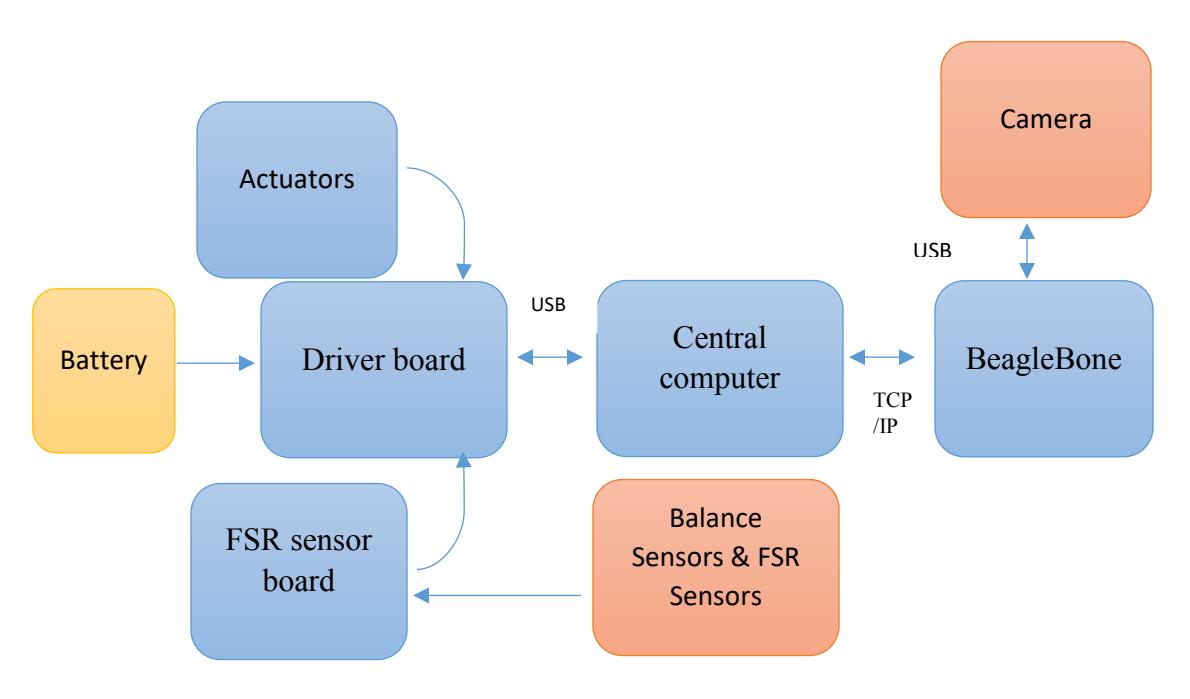
It drives the motors, drives sensors, manages switches (push button), receives the information from metatarsus and transfers them to the main computer. The processor of this board is STM32F407VG. RS485 and RS232 have been used for driving the motor and making connections with the metatarsus sensor, respectively. In this board, for increasing stability and preventing power curtailment during battery exchanging, a backup battery has been used. The battery of this board is a 3-cell Lithium-Polymer battery (Diymall 0.96 " Inch Blue I2c). On this board, an LCD is installed which fit into the robot and is used for the main and backup battery's voltage feedback and observation of sensors. This small LCD is a very valuable element for the online observation of batteries because lacking feedback from batteries voltage has made a lot of trouble in different competitions. It is important to note that the LCD can be separated from the board and in the game's half time, be connected to the robot. The main goal of this board is to drive and transfer data from the sensors to the main computer and transferring motor's data. Moreover, to better calculate the gyroscope sensor in balance controlling, a Kalman filter is used.
2-2-2 FSR sensor board
When moving with high speed, shooting, and etc. falling over is an issue. The proposal made by the unbounded designers for solving this issue is using FSR sensors [6] in metatarsus of each foot of the robot. In this way, 8 sensors have been used and the pressure on metatarsus in complete balance is calculated from a spectrum of pressure on each area. This spectrum consists of a numerical span with 12-bit accuracy and categorize the sensor number in high pressure, low pressure, and without pressure. The main goal of this idea is that in the robot's control system and behavioral features, information from each foot become a tool for the robot to better shoot and keep balance. The unbounded designer team has used this idea in instuctured kinematic behaviors. The robot can change the rotational value in motors up to 15 percent in movements such as shooting and jumping in order to make a more stable balance.
In order to use these sensors, a drive board must be designed to digitize the analog data and transfer it to the main board via RS232 protocol. To this end, a small board is set on the foot, 8 metatarsus sensors are given to the stm32f103c8t6. A 12-bit digitized data is achieved and transferred to the driver board in order to be used in the algorithm. It is important to note that two sensors are used for each foot metatarsus.
2-2-3 central computer
This boar is the main part of the robot and acts as its brain. All of the robot's codes except for image processing codes are processed in this unit. This board includes a mini PC Intel NUC717BNH. It is connected to the driving board by a USB protocol and receives all of the important data via this connection. Also, this board is connected to the BeagleBone by TCP/IP protocol and receives image processing data from this board and applies it in the program's main loop.
BeagleBone
To reduce the main board's activity, we have implemented an image processing section in BeagleBone and we transfer the results to the main board. This board consists of AM335x 1GHz ARM® Cortex-A8 on which image processing and machine vision codes have been implemented. Results will be transferred to the main computer.
Finally, electronic boards' connection block diagrams for unbounded designers robot is summarized as follows. (Fig 3)
3- Software
(This is a section heading with subsections below)
1-3- Motion & Control
Currently, our main and most important concern is a dynamic and fast walk. After investigating different methods and algorithms by Baset Teen-Size, MRL-HSL 2017[7] and Nimbro 2017[8], we decided to use an Omni-direction based method that can process with different speeds and has been created and developed by Baset Teen-Size. The major improvement of this module is using a trajectory learning approach that was trained on NAO robot in simulation [9] in this module, hands are used to increase dynamic and speed, and to prevent any decrease in stability. In addition, we slightly modified this module and added a balance control system through force sensitive resistors to improve the performance of this module.
2-3- machine vision
Image processing for finding the ball is consist of following steps. First, we have separated the game field by lines and in order to reduce the number of processes, the process is done only in the game field then we extract the white areas. In the past, in this step, we were using white candidates in the field to assume each one with the most amount of white color as the ball and following it. But today, all of these candidates are used as data in the neural network and after matching data with instructed ones in machine learning network, the ball will be found. In the mentioned neural network we have used several "to be" or "not to be" for learning the robot then with calculating common features in the images, we will obtain a function near the features, and in our analysis, we assign the candidates as inputs for the mentioned function.
We decided to look for various methods of finding the best response to our robot specifications and types of play. In this situation, if the robot loses its balance accidentally, for instance, the robot crashes or falls, it has to return to the home position then continues the game. Therefore, this can present a number of challenging problems. Moreover, widely-used approaches, including pixel-based techniques which essentially determine the correlation between images or featurebased techniques which basically exploit typical environmental properties, such as linear structures can be perfectly employed in order to solve this problem. Furthermore, we applied a variant of Markov localization, also commonly known as Monte Carlo Localization (MCL), to represent the belief of the robot regarding its current state. This includes the position of the robot in the field and its relative orientation with respect to the middle point. It should also be noted that the belief of the robot is represented by a set of random samples in MCL. In addition, each sample consists of a state vector of the underlying system, which can be regarded as a weighting factor and also the pose and angle of the robot in our case [10].Automatic extraction of an optimal set of landmarks from a specific environment can be used for visual navigation. Moreover, due to a high level of complexity, it requires approximation algorithm [11]. Thus, we proposed a novel graph-theoretic formulation of this issue as a yet another method of finding a solution to this problem. We decided to use a deep learning approach based on the convolutional layer to determine the critical point of landmarks such as the penalty point, cross lines, corner of the field, and goal [12,13].
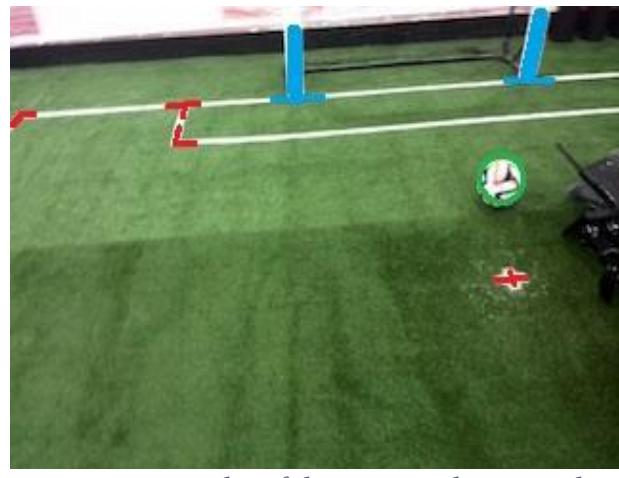
As mentioned earlier, in the past, the home point was used for path planning.We plan the path by the points made from the new method and by considering the arrangement of points and the type of points in the image, which leads to improvements over the earlier works. For this end, a simple neural network (RBF) has been exploited. The problem that remains is the relatively large amount of time for doing these methods. Some results of the proposed approach are shown in Fig 4.
Because of the high cost of finding the state of the robot, ball detection networks and localization will work separately and with sample rates equal to 45-30 Hz and 1-2 Hz, respectively.
It is highly crucial in our case to assign values to various points for navigation purposes as much as possible [14]. The need for reducing the processing time and also having more accurate solutions made us use some optimization tools for neural networks. The main focus of the team for the state finding of the robot is devoted to this aim.
In a large number of cases, we do not necessarily achieve the correct output, however, we are working diligently in order to solve the problem using the right answer.
3- Conclusion
This document is a brief summary of research studies on Teen Size and Kid Size Humanoid Robots by Unbounded Designers team. This team is supported by the Islamic Azad University of Isfahan and hopes to introduce its final open source design to market. Also, we try to develop principles and algorithms in motion control, image processing, localization and etc., under the support of the Islamic Azad University of Isfahan.
References
- Farazi H, Hosseini M, Mohammadi V, Jafari F, Rahmati D, Bamdad E. Baset Teen-Size 2014 Team Description Paper. Baset Pazhuh Tehran Corporation, Tech. Rep. 2014
- Robocup Humanoid league," Official website," [Online]. Available: https://www.robocuphumanoid.org/materials/rules
- " Intel Quanmax Official website," [Online]. Available: http://www.quanmax.com/site/product/qutepc-3000-series
- "Intel Official website," [Online]. Available: https://software.intel.com
- " Beagleboard Official Website" [Online]. Available: https://beagleboard.org/bone
- "Ada-fruit official website," [Online]. Available: https://cdnlearn.adafruit.com/downloads/pdf/forcesensitive-resistor-fsr.pdf
- Teimouri M, Salimi A, Farhadi A, Fatehi A, Mahmoudi H, Sharifi H, Sefat MH. MRL Team Description Paper for Humanoid KidSize League of RoboCup 2017. 2017.
- Allgeuer P, Farazi H, Sven Behnke. NimbRo TeenSize Team Description 2017. 2017.
- Farazi H, Ahmadinejad F, Maleki F, Shiri ME. Evolutionary approach for developing fast and stable offline humanoid walk. InAI & Robotics and 5th RoboCup Iran Open International Symposium (RIOS), 2013 3rd Joint Conference of 2013 Apr 8 (pp. 1-6). IEEE.
- A. C. Almeida, A. H. R. Costa and R. A. C. Bianchi, "Vision-based monte-carlo localization for humanoid soccer robots," 2017 Latin American Robotics Symposium (LARS) and 2017 Brazilian Symposium on Robotics (SBR), Curitiba, 2017, pp. 1-6.
- Agarwal, Pratik. Robust graph-based localization and mapping. Diss. Ph. D. dissertation, PhD thesis, University of Freiburg, Germany, 2015.
- R. Ranjan, V. M. Patel, and R. Chellappa, "Hyperface: A deep multitask learning framework for face detection, landmark localization, pose estimation, and gender recognition,"arXiv:1603.01249, 2016.
- L. Huang, Y. Yang, Y. Deng, and Y. Yu, "Densebox: Unifying landmark localization with end to end object detection," arXiv:1509.04874, 2015.
- P. Sermanet, D. Eigen, X. Zhang, M. Mathieu, R. Fergus, and Y. LeCun,"Overfeat: Integrated recognition, localization and detection using convolutional networks," arXiv:1312.6229, 2013.