YuShan Soccer 2D Simulation Team Description Paper for RoboCup 2012
Zekai Cheng, Qian Liu, Feng Guo, Feifei Tong
Department of Computer Science, AnHui University Of Technology, MaAnShan, P.R.China
Abstract This paper describes the new technology and method used in YuShan, including Equality Agent Cooperation Model and some tactics based on the model. What's more, this paper highlights the method of Data Mining in YuShan2012, comparing with YuShan2011, Yushan2012 has great improvement in the overall level with new technology.
Introduction
YuShan Soccer 2D Simulation Team was established in 2009, affiliated with Anhui University of Technology of China. YuShan participated in the RoboCup China Open since 2009, in the past few years; we had gotten the first and third prizes in RoboCup China Open. Besides, we achieved the 2th and 3th in Anhui RoboCup Open since 2008. And we took part in 2011 RoboCup Iran Open, and got the 12th in the end.
Before 2011, YuShan used UvA_TriLearn as our team base code. In 2011 YuShan changed the base and use Agent2D as our new team base code. In the new team base, we had transplanted our former works which was based on UvA_TriLearn into Agent2D,what is more, we have done lots of new works on the new base, especially using the method of data mining as the guide of our development, now YuShan has its own technical features different from other Soccer 2D teams.
Multi-Agent Collaborative System
Multi-Agent System is compose of some Agents which have their own resources and ability to complete a task with working together. In soccer 2D Simulation team, one team is one MAS. Each player in the team is an individual Agent. Each player has its own perceiving system and decision-making system, with such skills, player could create his own World Model and make his own decision.
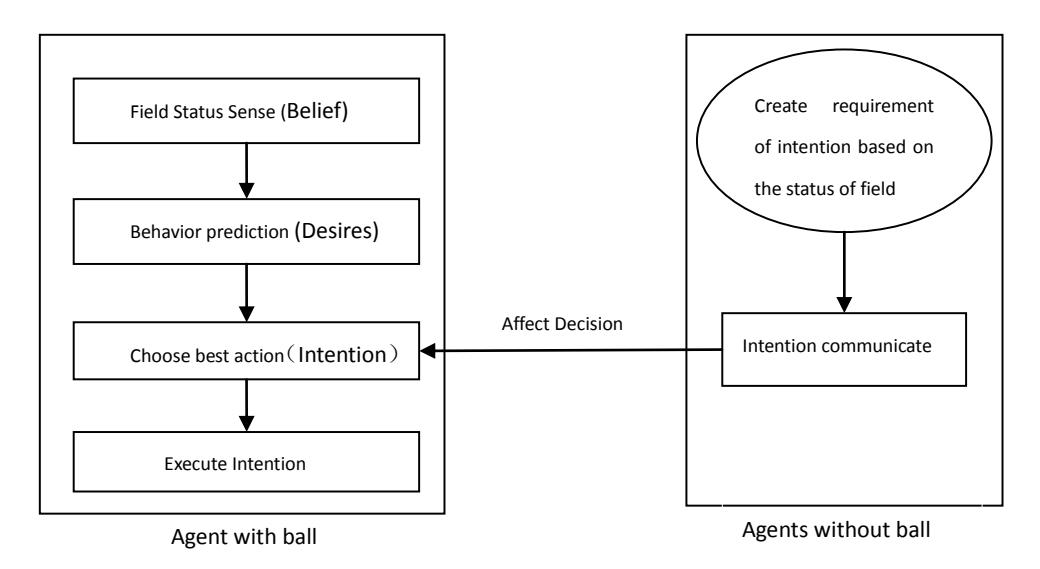
Agent-Base use the Action-Chain as the offensive system which was regarded as a BDI (Belief Desires Intention) Model MAS. Players use the World Model information as the Belief of their own, and the candidate actions which were generated by the Action-Chain could be seen as the Desires. Finally player Agent chooses the best action on the basis of the Belief, the best action is used as the Intention of Agent players. In another words, the Intention is the action with the highest scores of the Action-Chain.
Generally, the Action-Chain system has a great effort in offensive. But the Action-Chain reflects an unequal Cooperation, because the Agent using the Action-Chain is the one who is controlled the ball. He will lead all the offensive with limited information of his own, and the other players are in a none-purpose passive cooperation status. On such condition, the entire attacks will be dominant by one player, this kind of method sometimes makes the offensive cooperation not flexible enough.
Learning from GPGP(Generalized Partial Global Planning)Model, YuShan designed an Equality Cooperation Model as the complementary of Action-Chain. This model makes the offensive is determined not only by the player with ball, but also by these players without ball. The decision of player with ball could be changed by others players, with this model, players without ball could also take the initiative to plan the attacks.
Move Strategy
YuShan2012 defines passive move strategy and initiative move strategy.
Passive move strategy
Passive move is the strategy that players without ball move to the point achieved from formation system, and this kind of moves are used frequently in the game. Passive move basic maintain the movement trends of all players in the game, ensuring the stability of the formation of a team.
initiative move strategy
Initiative move is the strategy that players plan their moves based on the status of the field. When player do initiative move, he would find the best position himself and move the position, rather than be constrained by the formation.
The initiative move in YuShan2012 is divided into two parts, one is offensive move, and the other is defensive move.
Offensive move is used by offensive players to find the best attack move position, such as the move in breakaway tactic. When one offensive player who is without ball do offensive move, he would find the best waiting position based on the status of the field, generally the position will near the Offside Line but not over it. When the breakaway mode is active, he will generate the Breakaway intention and run over the Offside Line as quickly as possible.
Defensive move in YuShan2012 is mainly used in our Gravitational defensive model.
Gravitation is redefined as the tendency that one object attract another to close to it. Players move to the object according to the gravitation. YuShan 2012 use two gravitational model in the penalty area, the core of the model as formula (1) and formula (2) shows:
Relatively_x = Diff_ball_x * (1 - attract_ball_x) + Diff_player_x*attract_player_x; (1)
Relatively_y = Diff_ball_y * (1 - attract_ball_y) + Diff_player_y*attract_player_y; (2)
In the formulas above, Relatively_x and Relatively_y stand for the relatively distance of x-axis and y-axis .When YuShan defends his penalty area, one gravitation is generated by the ball, and another gravitation is generated by the opponent players.
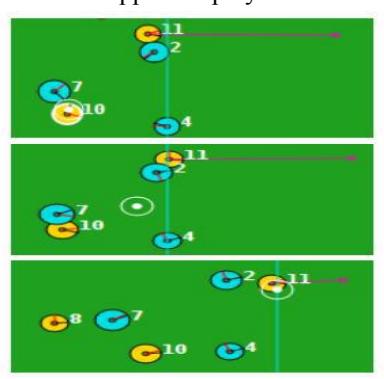
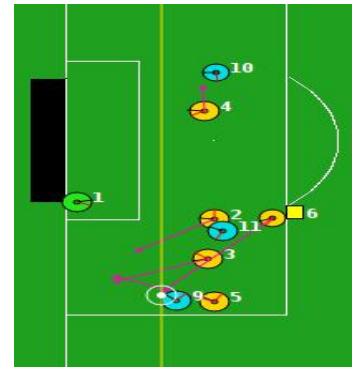
When two gravitations added together, our defender will determine his new defensive position. The new position is always on the line which links the ball and the opponent. In this way, YuShan could prevent opponent pass effectively. As Fig.3. shows, our defenders are always on the line which links the ball and the opponent players.
Formation System
We use the method of Computational Geometry to analyze the CDT (Constrained Delaunay Triangulation) and the TIN (Triangulated Irregular Network), and we study the generation and maintenance of the formation. In this way, we have had an intensive comprehension on the formation of Agent2D. We designed our offensive and defensive formations for our own characteristics, and we also designed No_PlayOn formations for YuShan.
Data Mining using in YuShan2012
The log files of Soccer 2D simulation game is the record of the game, so many useful information could be found in these files. We pay attention to the log files, and use the method of Data Mining to develop YuShan, we also use this method as the basic guide of our development.
We collected log files of the game and some other information from YuShan2012. In order to collect these log files, we had developed one lightweight data analysis tools –Log Analysis to get the data and do data pretreatment. After pretreatment, the data could be used for Data Mining with the help of Data Mining software. In this way, we could get a better comprehension of all kinds of parameters in the team, what's more, rules that hided in the data could be found to help us to design our strategic decision.
Data Mining Process of YuShan2012 as Fig.5. shows:
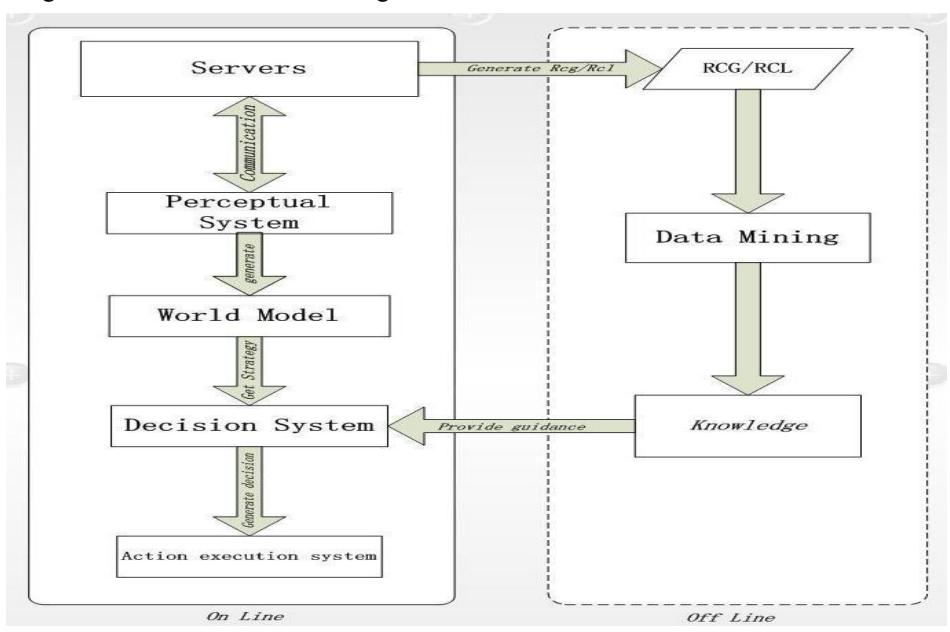
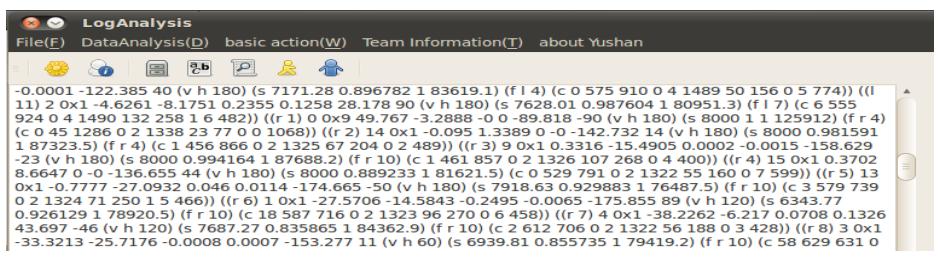
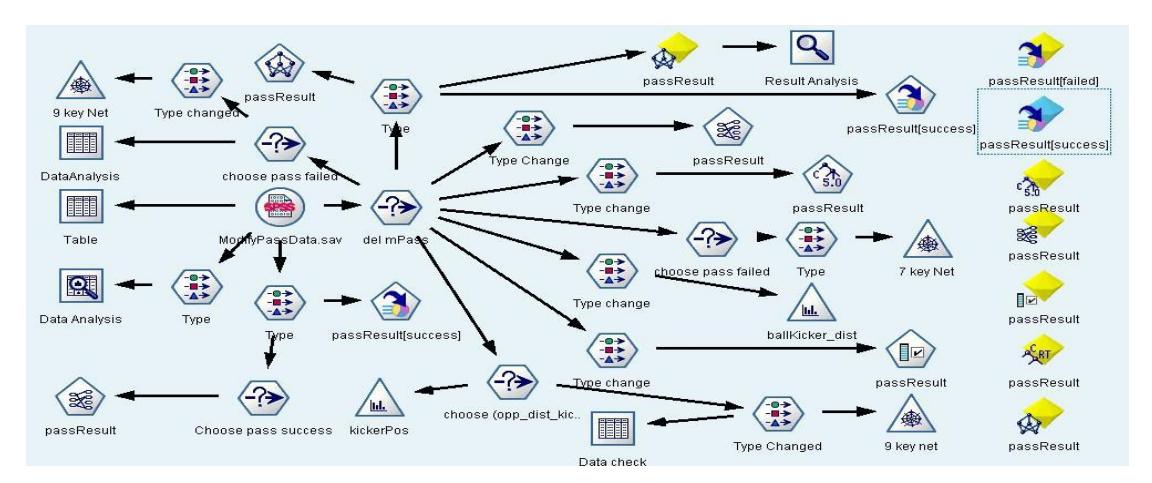
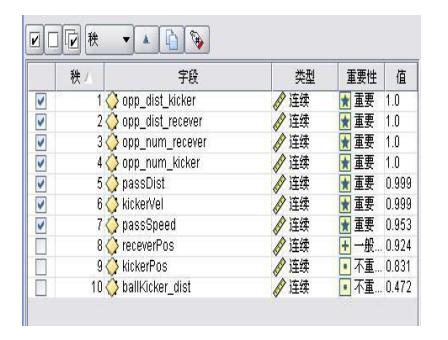
Table 1 The success rate comparison between YuShan2012 and YuShan2011
| Team Name | Pass Numbers | Pass Successe | Pass Failed | Pass success rate |
|---|---|---|---|---|
| YuShan2011 | 432 | 385 | 47 | 89.12% |
| YuShan2012 | 423 | 385 | 38 | 91.20% |
Conclusion and Future Work
YuShan use Data Mining as the basic guide of our development. We found problem from data and solve it with data. In future, we will continue using this method, we will try to analyze more basic actions, make more reasonable data pretreatment, and use more effective Data Mining method to continue this work.
Besides, the Stamina System of YuShan has some problems, for example, the players always lack of stamina, so we are planned to use a new Stamina System to keep the stamina of our players in a high level.
References
- RoboCup Official Site. http://www.robocup.org/
- Aijun Bai. WrightEagle 2D Simulation Team Description Robocup 2011 http://www.robocup.org/2011
- HideHisa Akiyama and Hiroki Shimora. HELIOS2011 Team Description Paper. http://www.robocup.org/2011
- Hidehisa Akiyama .RoboCup soccer2D simulation league: introduction to the RoboCup soccer simulation. journal of Japan Society for Fuzzy Theory and Informatics 2011