JMU3D Team Description Paper
WangGang, CaiHuaxu, LaiZhihui, LinQing
Computer Engineering College JiMeiUniversity Xiamen China 361021
Abstract This document describes the ideas of implementing and simulation of a humanoid soccer robot for Robocup 2007 3D Soccer Simulation section, First of all, thanks to the unikoblenz University's great work and all of the simulation 3d teams' efforts, so that we can see the humanoid simulation 3D robot play on the soccer field, although it still has several bugs. This page is mainly introduce JMU Humanoid Simulation 3D League's Architecture, positioning, gait pattern.
Introduction
JMU Simultation 3D Team was established in 2006,and successfully attended several competitions. Last year we won 4th place in IranOpen08 and enter the quarterfinals in chinaopen08.besides,we also took part in Robocup08 in Suzhou.
This paper describes the main features and implementation of our team. Section2 demonstrates our agent architecture. Our gait pattern will be illustrated in Section3. We introduce our tactics structure in Section4.Followed by our future work and conclusion.
Agent Architecture
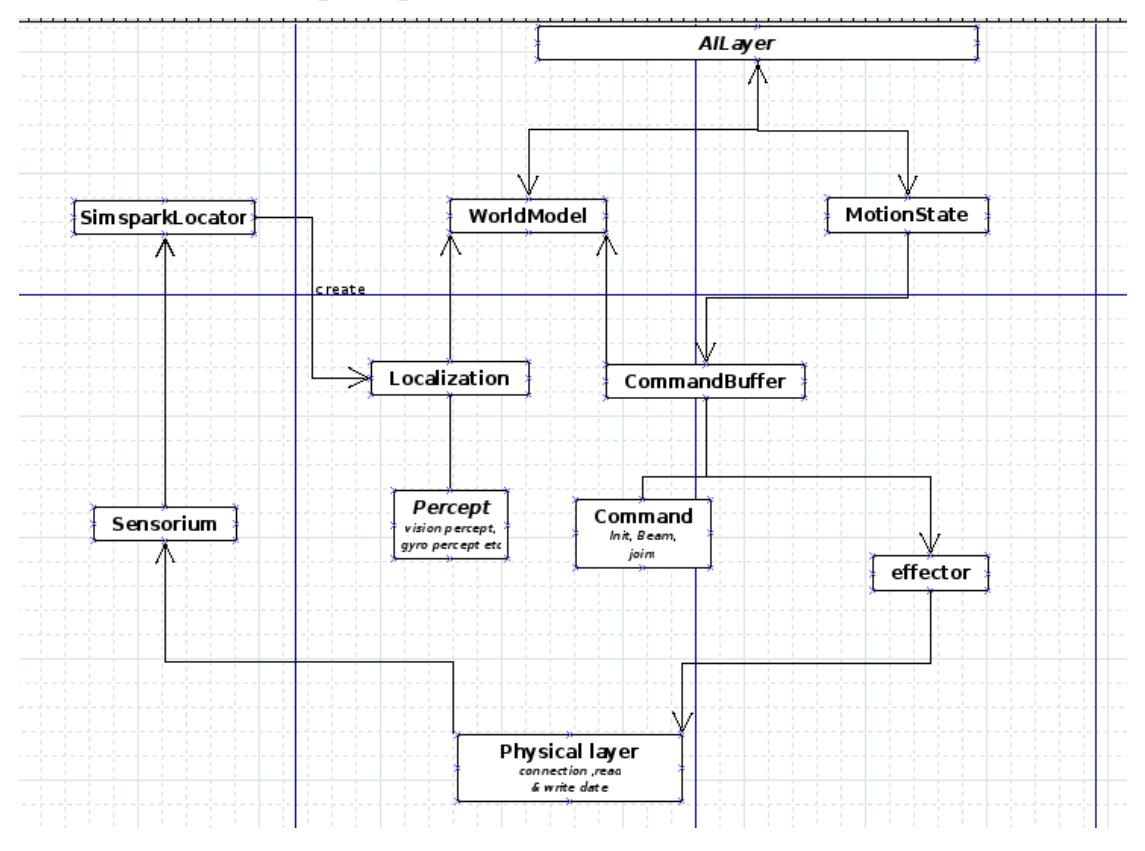
Unlike other teams, Our application is developed in java. Cause our team members are all more familiar with java than c++.besides it can also help us build a powerful architecture to achieve some goals like readability,scalability,distributive. Based on nostrict layered agent architecture with singleton modules[4],the plugin mechanism was added, which enable us only change one module when the server changes. It makes the agent architecture more flexible, considering the server is still under development, there will be many changes of the server in the near future, such as perception, humanoid model, etc.
Gait Pattern
The new model based on NAO is much more stable and realistic than the previous version. But the low level skills like walking and turning is still the principal task. After a few months research and development,we build a model which is based on the FRP from the information gotten by server. This model provide a fantastic solution to the problem of agent's motion action. First of all, it can change the posture of the agent easily so that we can create more new motion action without any problem. Second, it can adjust the frequency of the walking, Besides, it is very Easy to realize the transformation of interstate.
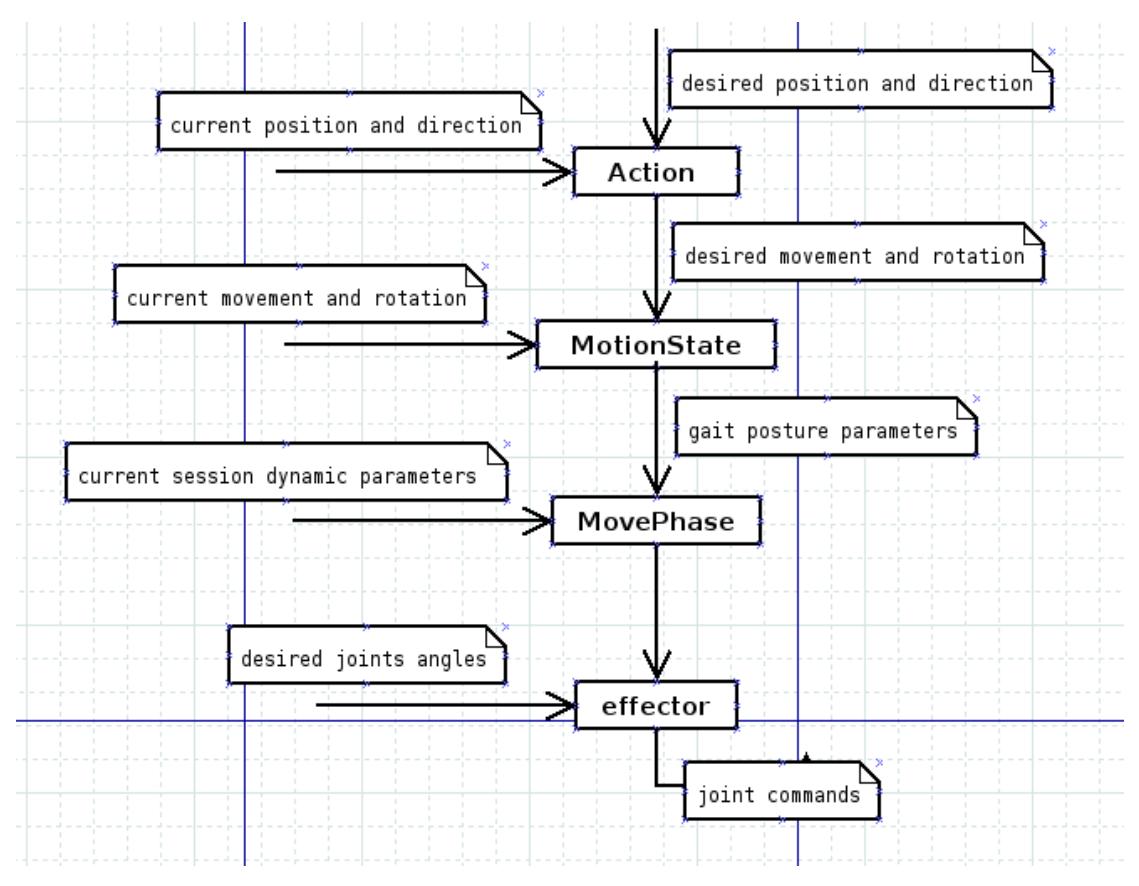
Fig2 illustrates the structure to achieve this model. Multiple layers that run on different time scales contain tasks of different complexity.
State:The state save the parameters of this state (or motion skill) such as the frequency of this state, and the basic posture of this state, etc.
MovePhase: model generator, it stores all of dynamic parameters the model needs and determines the desired of joint angles. it won't reset the fields in the object until some events is triggled. For example, when the agent falls down, the fields in the object will be reset.
Effector: each joint velocity is produced by the effector according to information stored in movePhase.
This structure restricts interactions between the modules and thus reduces the complexity of behavior engineering.
tactics structure
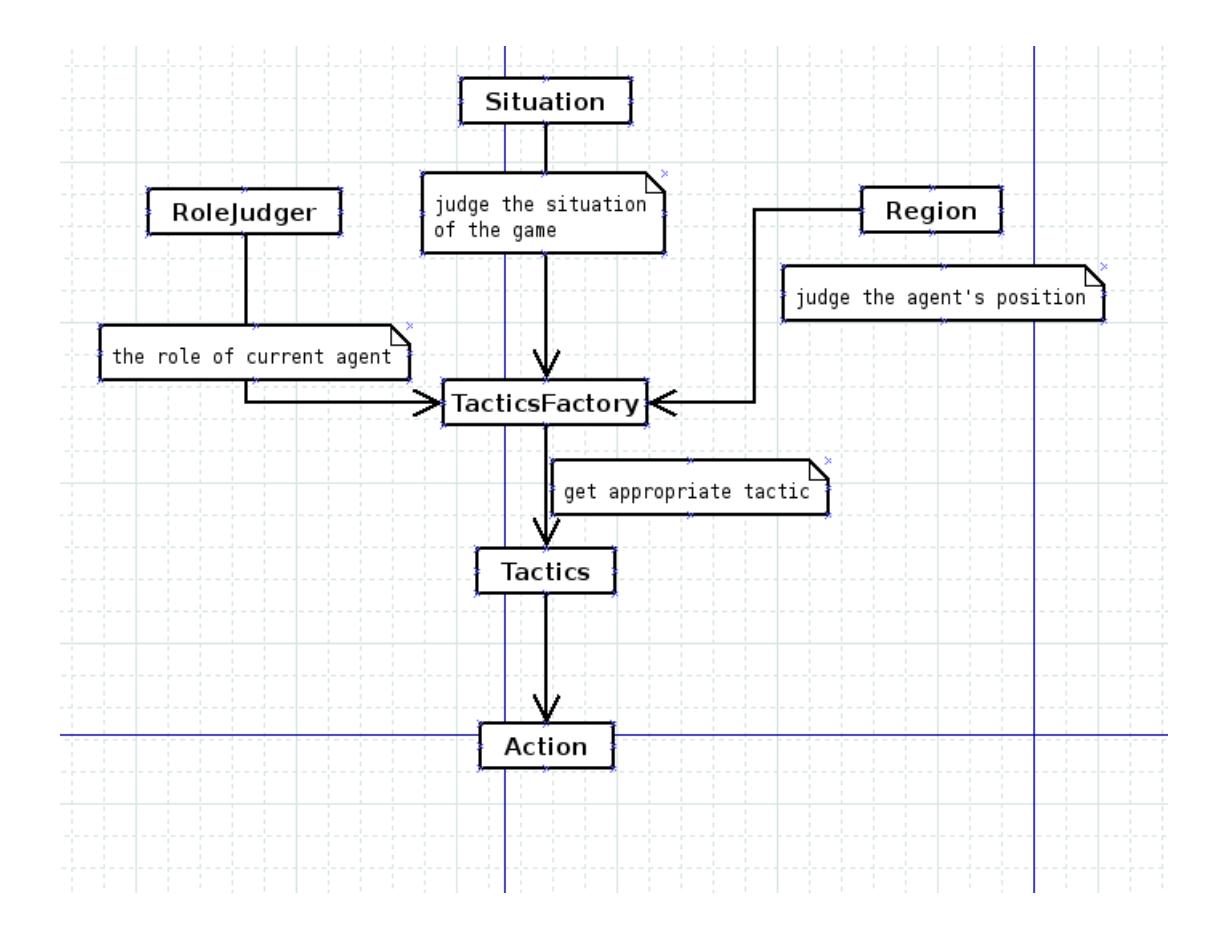
agent should be able to take the appropriate tactic and action selection in accordance with the the situation, the player's role and the location in the pitch, which can help agents coorperate well and avoid the phenomenon of fighting with teammate. In order to solve this problem we establish an architecture which shows in figure 3.
Conclusion and Future Work
During the last half year, we have made a great progress. Especially in base motion skills and actions, but it still remain a lot of problems in coorperation and walking path planning. We hope we can strengthen research in this area and at the same time,we will try to apply some of the mature technolygies used in 2d to conquer the problems. Besides, it is very urgent to develop and improve our development tool to debug and test it easily. Finally and most importantly, we will try our best to promote this project in our university so that we can attract more students to join us.
We all have a dream that we can be the best of ourselves.
References
- Hirlchika Inoue: DynamicallyStable Motion Planning for Humanoid Robots[J] Auton Robots 2002
- Goldberg K Y,Raibert M H,Conditions for symmetric running in single—and doublesupport[C]//Trans IEEE Conference on Robotics and Autommation,1997.
- R.Murphy.MIROSOT97Robotics Competition Corner[J].Robotics and Autonomous Systems 1998
- Robot Technique and Application / 国家高技术智能机器人专家 组, 中国兵器工业第二一 0 研究所[期刊]. 1994, no.1(1994,7)
- 步行机器人和动力型假肢 / (南)伍科布拉托维奇著; 马培荪, 沈乃 勋译 北京: 科学出版社, 1983.7