Team Description Paper 2023
Mikhail Asavkin, Neeraj Gopikrishnan, Maria Lizura, Claude Sammut, Peter Schmidt, Abhishek Vijayan
School of Computer Science and Engineering, The University of New South Wales, Sydney, New South Wales, 2052
https://runswift.readthedocs.io · https://spl.robocup.org/results-2022/ · https://b-human.de/downloads/publications/2017/coderelease2017.pdf · https://kensington-p.schools.nsw.gov.au/ · https://www.estate.unsw.edu.au/village-green-redevelopment-0 · https://github.com/UNSWComputing/PyBullet-Nao-Motion-Editor
Abstract This paper describes the rUNSWift team's participation in the RoboCup Standard Platform League. The team has been competing since 1999 and achieved third place at RoboCup 2022. The paper discusses the team's codebase developments, ongoing research in vision and motion systems, and contributions to the broader robotics community.
1 Team Information
Team Name: rUNSWift Team Leader: Mikhail Asavkin
Email Address: [email protected] Team Website: https://runswift.readthedocs.io
Country of Origin: Australia University affiliation: UNSW Sydney
2 Code Usage
Most of the rUNSWift codebase has been incrementally developed over the years. We would like to thank the Nao Devils team for the use of their camera driver first used in 2018, with some modifications.
The basic structure of the 2022 vision system remains the same as that of 2017-19 [2], [3], [1].
Localisation and state estimation remain largely the same as 2018 [3] and 2019 [1].
rUNSWift's motion is primarily based off the Hengst's walk generator [4] developed in house and used since the 2014 RoboCup competition.
The basic structure of the 2022 tooling remains the same as that of 2019 [1].
3 Own Contribution
While rUNSWift had made significant contributions previously, during the period from 2019 to present, the ongoing research hasn't resulted in publishable articles yet.
We are working on several major improvements that should result in significant contributions to the state-of-the-art in 2024-2025. Currently, we have a number of experimental tools with which we plan to investigate and improve our weakest aspects of play.
3.1 Vision
Historically, the team has been using a multi-stage vision pipeline with a mixture of ML-based and algorithm-based approaches. We are developing an experimental approach that would allow us to train the vision pipeline using a single ML model instead. This significant undertaking requires us to build tools for capturing auto-labeled data during the game and under special situations on the field. In 2022-2023 period, we have been working on a set of tools to enable the data capture and auto-labeling for future training.
3.2 Motion
A simulator based on PyBullet [6] is under development to be used as a platform for testing and improving robot motions. The main use for this is to test different getups and walks in simulation so as to not cause wear/damage to real robots. We also hope to use Deep Reinforcement Learning to further tune our fall and getup motions using this simulator.
3.3 Architecture
The team has been working on implementing and testing ROS2 nodes running on the robot. We see great potential in supporting an ecosystem of well-maintained, narrow-purpose, open-source packages based on ROS as it would allow for easier innovation translation between RoboCup SPL and the industry at large.
4 Past History
Team rUNSWift has been competing in the Standard Platform League (SPL) since 1999. Every year, we strive to improve the weakest aspects of our system and adapt it to new challenges presented by the SPL technical committee (TC) through rule changes.
In 2022, RoboCup returned to the in-person format of Sydney 2019 and prior years, at the Bangkok International Trade and Exhibition Center (BITEC) Thailand. The competition took place from 13-16 July 2022, with a day and a half of setup and a closing research symposium. The seeding round consisted of a Swiss tournament which seemed to accommodate the 13 competing teams better than the pools and play in rounds of prior years. A single-elimination tournament decided the winner, with a 3rd place playoff added. rUNSWift achieved 3rd place in the competitions at BITEC, equaling the team's performance in Sydney 2019.
rUNSWift feels fortunate to have placed 3rd overall this year, winning 2 games out of 4 in the seeding round, a quarter final and 3rd place game. [1]
For the upcoming year, we plan to focus on rebuilding the team's capability post-COVID, passing the metaphorical baton to a new generation of RoboCuppers. We might also take part in GORE2023 by sending robots if remote participation is possible.
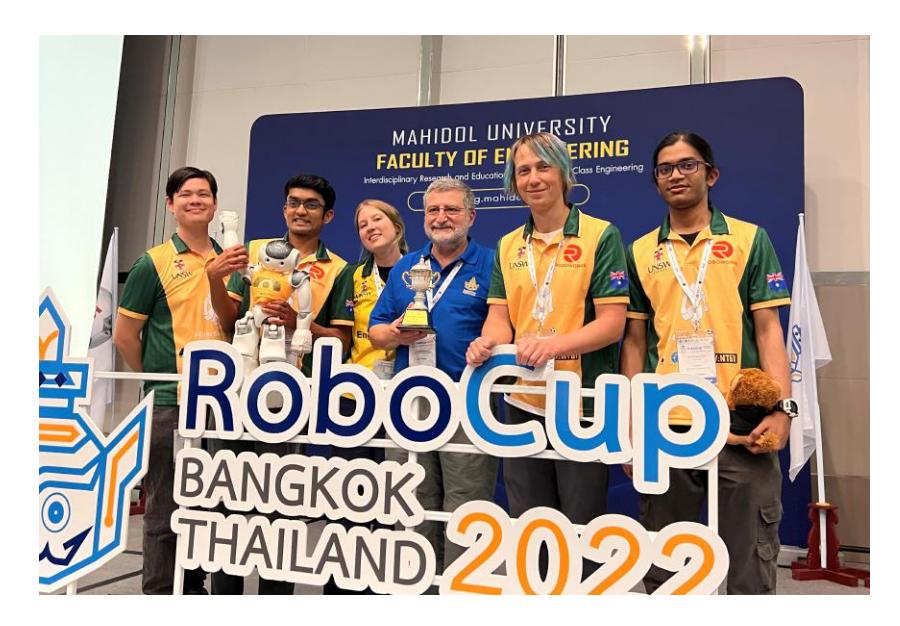
Table 1. Results of competitive games from 2019-2022
| Competition | Level | Opponent | Score | Result |
|---|---|---|---|---|
| RoboCup 2022 | Third-place | Nao Devils | 1-0 | win |
| RoboCup 2022 | Semi-finals | B-Human | 6-0 | loss |
| RoboCup 2022 | Quarter-finals | UT Austin Villa | 1-3 | win |
| RoboCup 2022 | Round 4 | SPQR Team | 0-5 | win |
| RoboCup 2022 | Round 3 | UPennalizers | 5-0 | win |
| RoboCup 2022 | Round 2 | UT Austin Villa | 0-0 | draw |
| RoboCup 2022 | Round 1 | HTWK Robots | 3-0 | loss |
| GORE 2022 | Quarter-finals | RoboEireann | 0-1 | loss |
| GORE 2022 | Round 6 | SPQR Team | 0-0 | draw |
| GORE 2022 | Round 5 | R-ZWEI KICKERS | 5-0 | win |
| GORE 2022 | Round 3 | B-Human | 0-7 | loss |
| GORE 2022 | Round 2 | Bembelbots | 1-0 | win |
| GORE 2022 | Round 1 | HULKs | 6-0 | win |
| RoboCup 2019 | Third-place | Nao Devils | 11-2 | win |
| RoboCup 2019 | Semi-finals | B-Human | 3-0 | loss |
| RoboCup 2019 | Quarter-finals | TJArk | 5-0 | win |
| RoboCup 2019 | 2nd Round Robin | Bembelbots | 7-0 | win |
| RoboCup 2019 | 2nd Round Robin | HULKs | 5-0 | win |
| RoboCup 2019 | 1st Round Robin | Camellia Dragons | 4-0 | win |
| RoboCup 2019 | 1st Round Robin | UT Austin Villa | 4-0 | win |
| German Open 2019 | Third-place | HULKs | 1-2 | loss |
| German Open 2019 | Semi-finals | B-Human | 5-0 | loss |
| German Open 2019 | Play-in | Berlin United | 10-0 | win |
| German Open 2019 | Round Robin | HTWK | 1-4 | loss |
| German Open 2019 | Round Robin | HULKs | 2-1 | win |
| German Open 2019 | Round Robin | NomadZ | 8-0 | win |
5 Impact
5.1 On SPL
The Hengst walk engine [4] won 2014 and 2015 and reached the final of 2016 as part of the UT Austin Villa system. Further it was integrated into B-Human 2017 code release. [2] A labelled dataset for field segmentation consisting of 20 videos was published in 2021 [5].
In addition, rUNSWift has had several members become members of the SPL OC and TC in the past, as well as most recently, the current president of RoboCup.
5.2 On UNSW & local community
During Open Day at UNSW held on 3 September 2022, rUNSWift set up a robotics demo stall including Naos playing on a small field, to inspire prospective students to consider Computer Science/STEM in general as a career, also entertaining small children to create positive associations with robots.
rUNSWift also organizes demo games on the full SPL standard field in the Kensington lab periodically as a platform for recruitment, refereeing, training, and to inform students about RoboCup and SPL.
With regard to coursework, students are given the option to work on a project related to RoboCup as a part of a Robotics Software Architecture course offered at UNSW, offering them a chance to expand their knowledge by working on a real project.
rUNSWift has historically had an association with Kensington Primary School [3], for example on 9 August 2018 taking Nao robots on site to inspire questions, inform and entertain K-6 students.
rUNSWift looks forward to a potential future including competition taking place on the recently redeveloped village green synthetic football field built to FIFA accreditation standard. [4]
6 Other
Acknowledgements
The 2022 team wish to acknowledge the legacy left by previous rUNSWift teams and deeply thank the School of Computer Science and Engineering, University of New South Wales for their continued administrative, financial and laboratory support to our team. We'd also like to warmly thank additional sponsors and contributors, including though not limited to, RoboWorks, Marathon Robotics, Ocius, ANT61, WisME and CR8. We also wish to pay tribute to all RoboCup and in particular RoboCup SPL teams that inspire and drive our innovations in the spirit of friendly competition.
References
- Ashar, J., Brameld, K., Jones, E.R., Kaur, T., Li, L., Lu, W., Pagnucco, M., Sammut, C., Sheh, Q., Schmidt, P., Wells, T., Wondo, A., Yang, K.: runswift team report 2019. Tech. rep., The University of New South Wales (2019)
- Bai, G., Brady, S., Brameld, K., Chamela, A., Collette, J., Collis-Bird, S., Hall, B., Hendriks, K., Hengst, B., Jones, E., Pagnucco, M., Sammut, C., Schmidt, P., Smith, H., Wiley, T., Wondo, A., Wong, V.: runswift 2017 team report and code release. Tech. rep., The University of New South Wales (2017)
- Brameld, K., Hamersley, F., Jones, E., Kaur, T., Li, L., Lu, W., Pagnucco, M., Sammut, C., Sheh, Q., Schmidt, P., Wiley, T., Wondo, A., Yang, K.: runswift 2018 team report and code release. Tech. rep., The University of New South Wales (2018)
- Hengst, B.: rUNSWift Walk2014 report. https://github.com/UNSWComputing/rUNSWift-2014-release/blob/master/20140930-Bernhard.Hengst-Walk2014Report.pdf, University of New South Wales (2014)
- Lu, W.: The rUNSWift SPL Field Segmentation Dataset (08 2021)
- rUNSWift: PyBullet Simulator, https://github.com/UNSWComputing/PyBullet-Nao-Motion-Editor